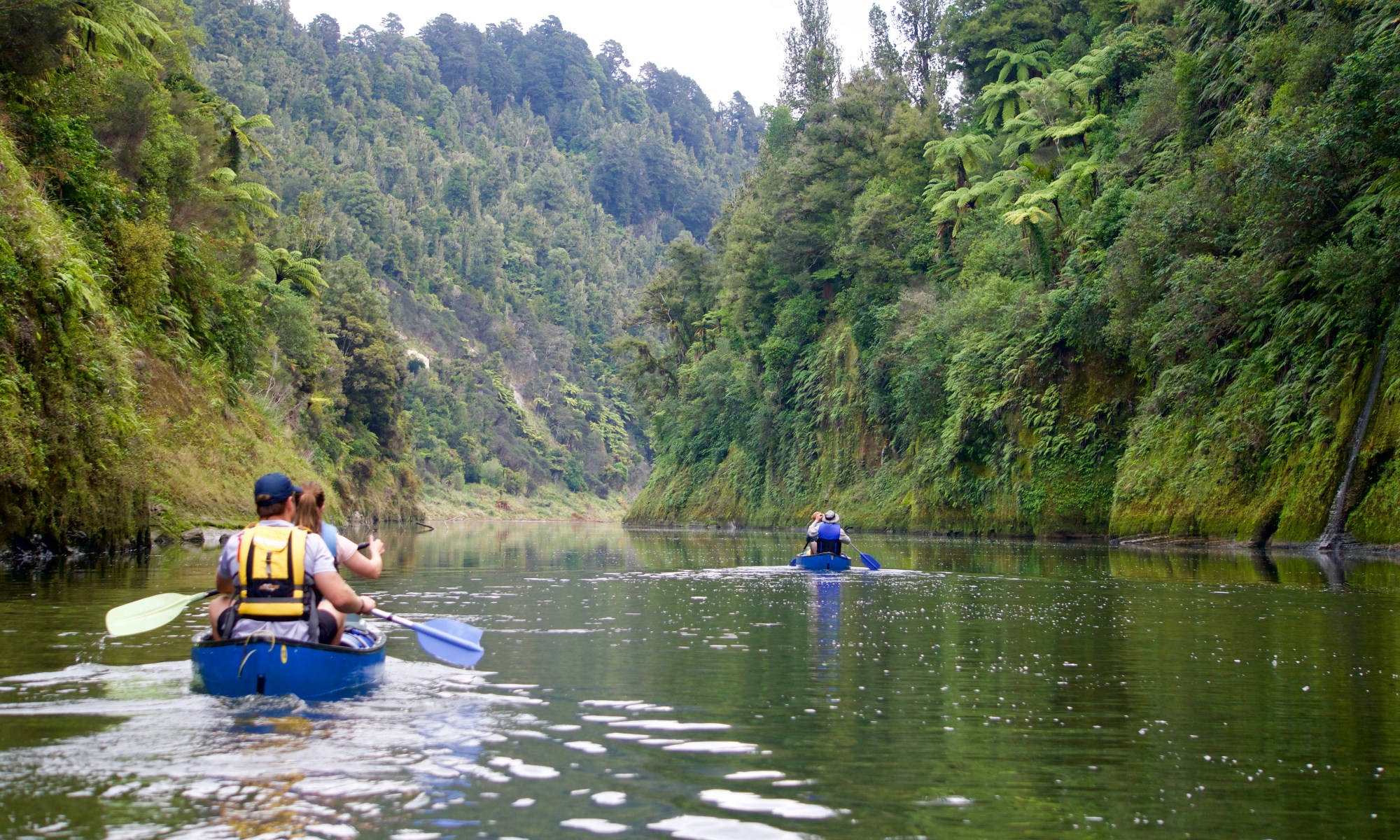
It takes precision to steer a canoe down a rapid. Standing waves curl upstream towards the bow, ready to fill the boat. They should be skimmed, not ploughed through, though the canoe should be kept close enough to the turbulent current to avoid other obstacles. Precision is something Eric did not have on our third day on New Zealand’s Whanganui River.
Cold water is my dad’s kryptonite, and the fact that he planned this family trip anyway was a testament to the quality of the wilderness to be enjoyed. The Whanganui draws its source from the North Island’s Central Plateau, a high-altitude desert, home to a national park and snow-capped, active volcanoes. It’s an alien landscape full of tussocky cinder cones and ancient alpine forests. But leave the park and the farms take over. European settlers began deforesting the region in the 1800s and pieces of old growth forest are rare – except along the abrupt banks of the Whanganui.
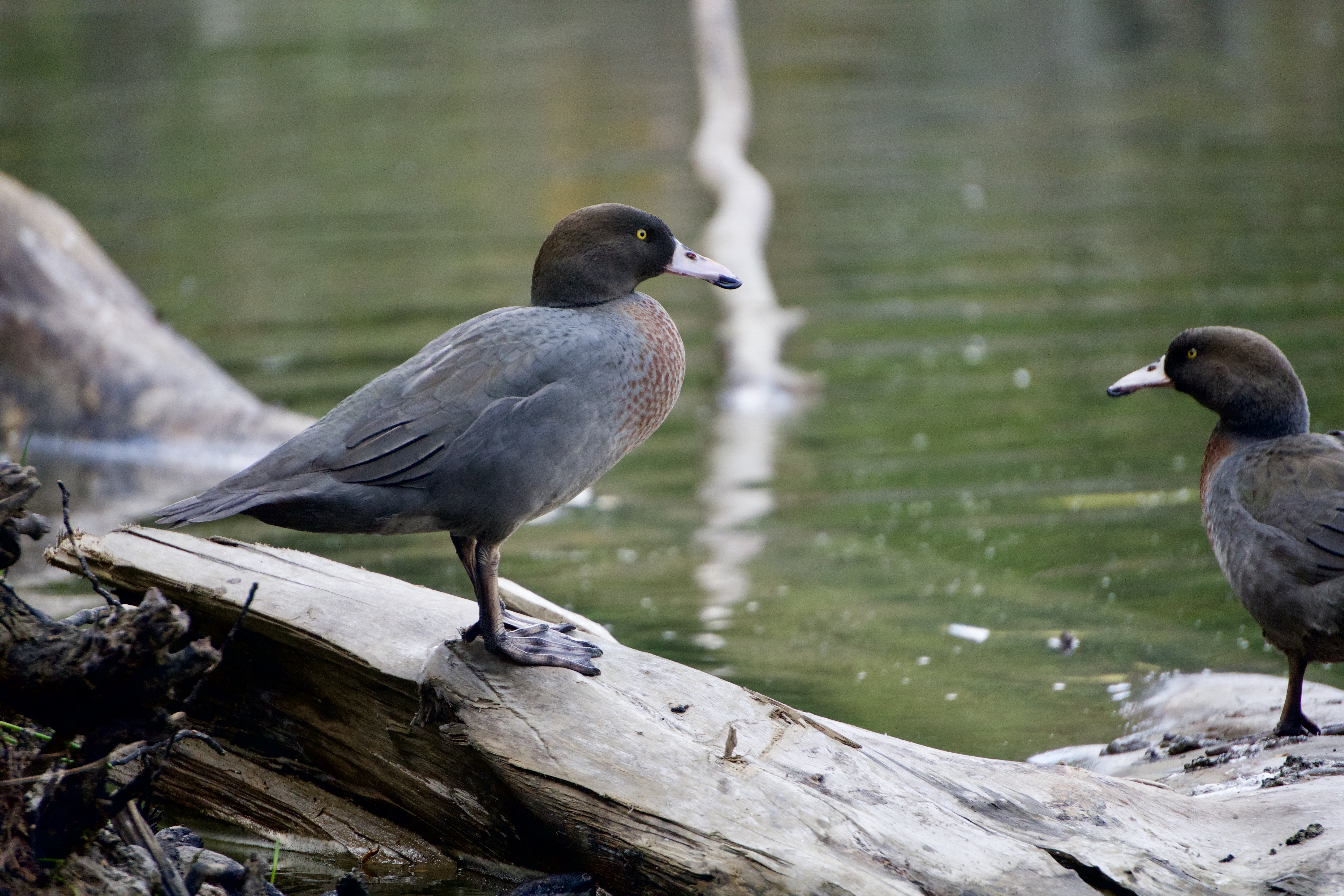
On a cool morning in early May, we pushed our canoes over silt and pebbles and into the water, dipping our paddles into the Whanganui for the first time. Within a minute we were gliding as silently as we could past a pair of endangered whio, or blue ducks, who slept standing on a rock in the middle of the stream.
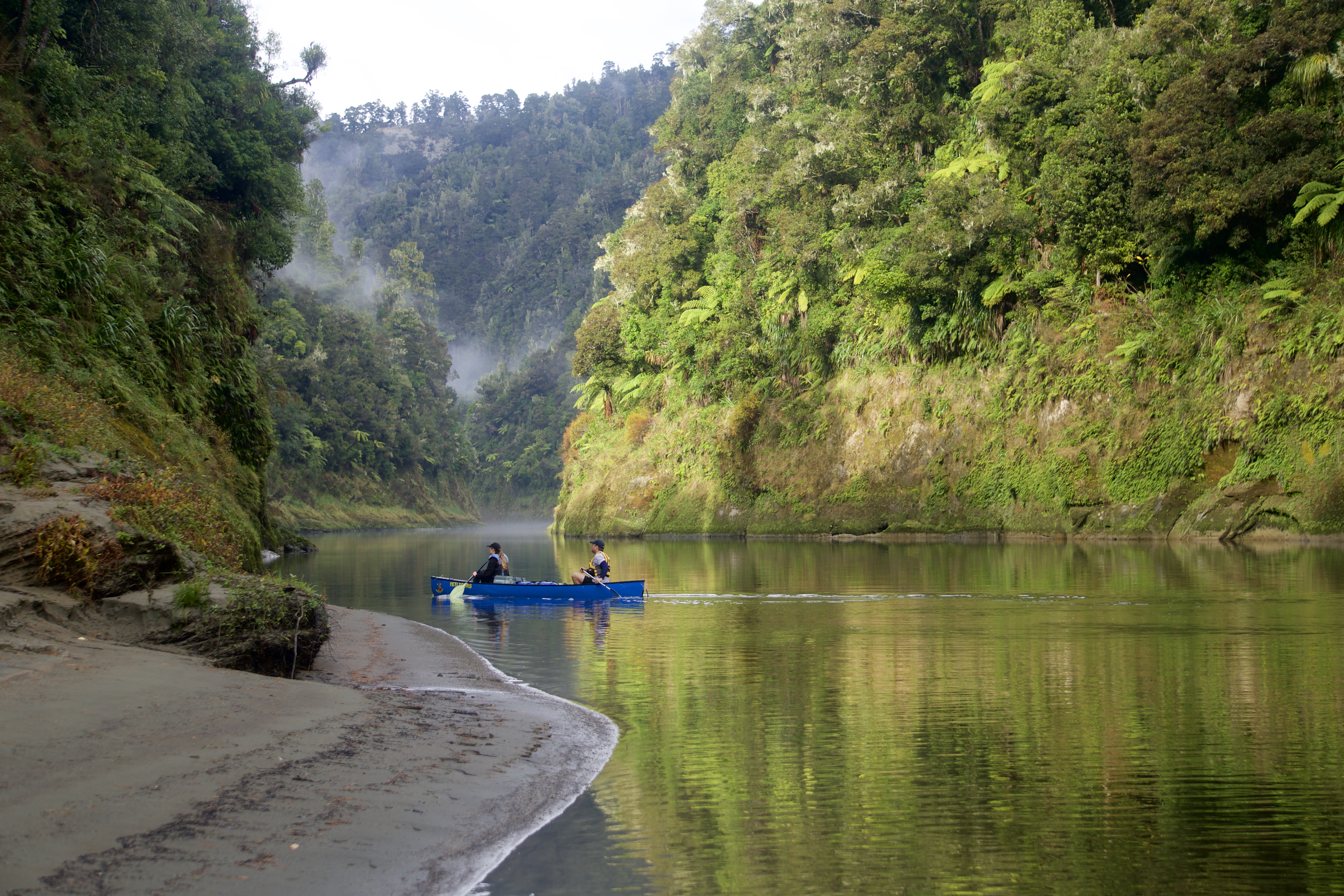
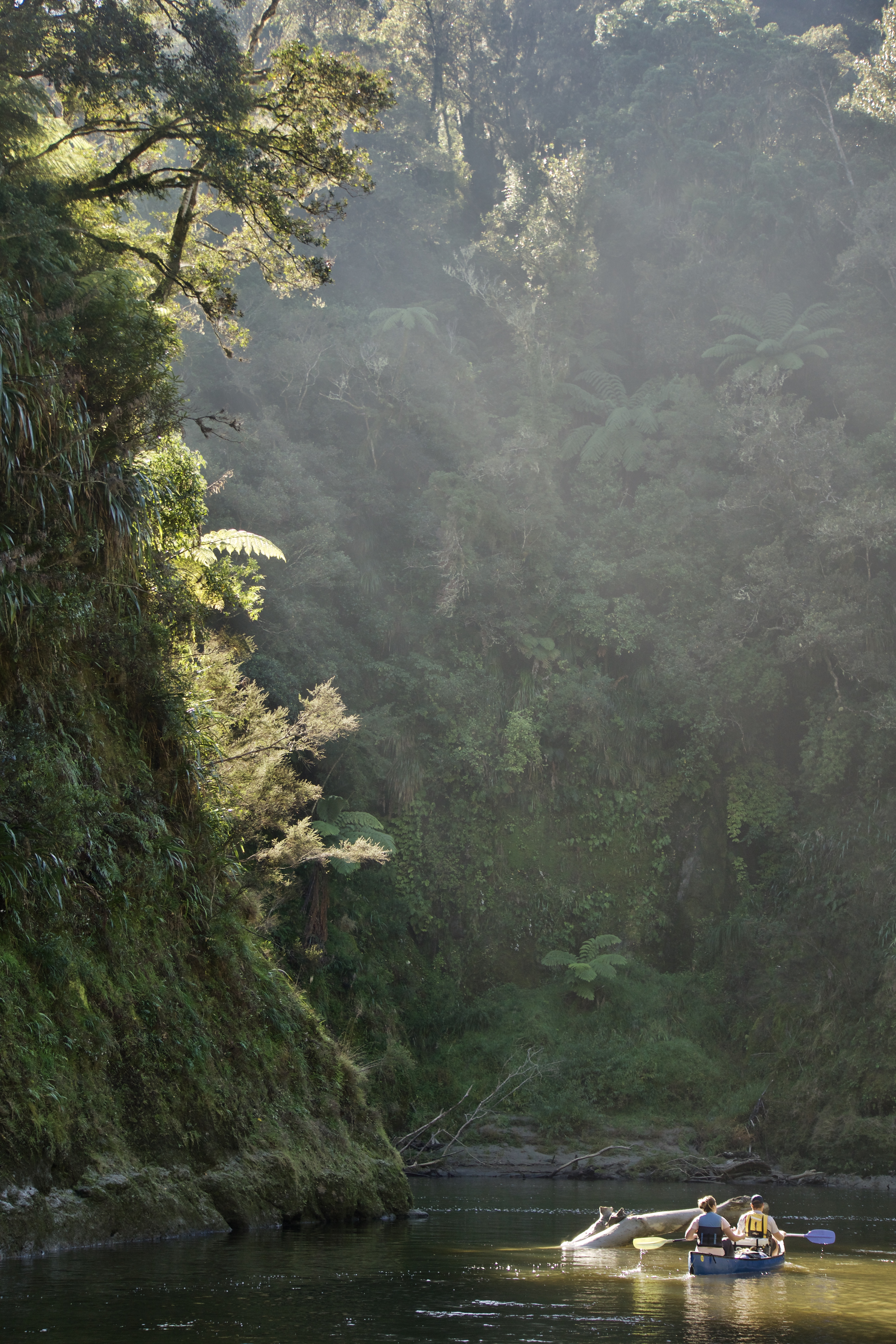
The Whanganui has carved its channel between steep limestone cliffs covered in deep green vegetation. For three days I pretended we were in the old New Zealand, the New Zealand before European settlers logged everything they could and farmed the land. Alone on the river in the off-season, it was almost believable, but for the foul-smelling feral goats that graze along the river banks, and the eerie silence of the forest. When Captain Cook first set foot on these islands, he reported that the dawn chorus – that symphony of early morning birdsong – was deafeningly loud. Today, along the Whanganui, the birdlife consists of a few tui, silvereyes and welcome swallows, but little more. The introduced predators are too many.
Forays down this river are set up like a backpacking trip. Tributaries, picnic spots and campsites are all sign-posted along the way. We stayed in backcountry huts tucked up in the forest, one of which doubles as a meeting house for the local Maori iwi, or tribe. The Maori have long considered the Whanganui River to be an ancestor of their people, and in 2017, the New Zealand government granted the river the same legal rights as a human being. Under the law, harming the river is now no different from harming a person.
“E rere kau mai te Āwanui,
Mai i te Kāhui maunga ki Tangaroa
Kō au te Āwa, kō te Āwa kō au.”
“The great river flows
From the mountains to the sea.
I am the river, the river is me.”
On the Whanganui, I discovered that descending rapids in a canoe elicits an exciting mix of terror and delight – an addicting feeling. We knew a rapid approached when the river began to whisper. Then, gradually, the topography of the rapids would come into focus: rocks best avoided to the right, a shallow bank to the left, and the river’s black tongue in the middle, pointing to a series of standing waves straight ahead.
On the last day, my dad and Eric met their match. Eric just didn’t quite nail the approach, and the current sucked them in. The first wave filled the boat half way, the second wave filled it all the way. From upstream we watched my dad float up and out of the boat while Eric used every limb available to brace himself inside the canoe and paddle, still clutching an unsecured cooler. My dad clambered onto shore like an outraged cat exiting a bath and threw his paddle across the beach. It occured to me that I had never really seen him that soaking wet before.
We made quick plans for lunch while my sister’s boyfriend, Matt, assured Eric that he most likely wouldn’t be ousted from the family. Fed and dry-ish, we pressed on. It wasn’t long before Matt, ever the team player, had the good grace to hit a boulder, ejecting my sister from their canoe and balancing the ratio of people-gone-overboard. Wounded prides were eased and again we traded a little temporary grief for decades of laughter and reminiscing.
 Stars, like salt.