

Our big birding day, that is.
San Diego County has more species of birds than any other county in the United States: 520 species. On Global Big Day, Eric and I set out to see as many of them as we could.
We have a lot of birds because we have a lot of geography; the county has an array of environments from coast to mountains to desert. The conditions in each of these environments are different, and while some species can live in multiple environments, most species have adapted to the conditions of one environment to make it their habitat. More habitat types means more ways to adapt, and thus more species.
Each year, the Cornell Lab of Ornithology hosts a one-day event called Global Big Day. On that day, people across the world go birding and submit checklists of the species they’ve seen to Cornell’s eBird website. While birders use eBird checklists year-round to keep track of their sightings, Global Big Day unites all birders in one awareness-generating push to paint a picture of bird populations all over the world. Data submitted to eBird on Global Big Day and throughout the year is studied by scientists to learn where birds live, when they migrate, and how their populations are changing.
Eric and I love collective birding events (the Audubon Christmas Bird Count is another favourite). They make us feel connected to a worldwide team of people who are curious about nature and who contribute their knowledge to help protect it. Since Eric and I are both slightly competitive, Global Big Day is also an excuse to spend a full day trying to identify as many species as we can.
This year, to get that high species count, we decided to bird in as many habitats as possible. Switching habitat’s in San Diego is quickly achieved by moving east to west or west to east. Farthest west lies the coast, where surf meets sand and cliffs. Just inland, beaches transition to lagoons and estuaries where rivers widen and mix with the tide. Upstream from these lagoons we encounter riparian woodlands, where river-flows support willows, sycamores, oaks and cottonwoods. Land uphill of rivers is usually covered in coastal sage scrub and chaparral, two types of scrublands that typify our mediterranean climactic region. Coastal sage scrub occurs closer to the coast and includes drought deciduous sages, sagebrush, bush sunflowers and buckwheats, as well as succulents like agaves, dudleyas, chollas and prickly pear. Chaparral occurs further inland and includes chamise, lilac, manzanita and yucca, as well as miniature, dark green forests of evergreen shrubs such as lemonade berry, toyon and scrub oak. Grasslands can be found where ranching has occurred and mixed introduced grasses with native bunch grasses. As we move further east, we meet the mountains: Mount Palomar, the Cuyamacas, and the Lagunas, to name some of our ranges. In the mountains, the cooler temperatures at elevation support oak woodlands and, higher yet, pine forests. From their summits, the mountains’ eastern slopes drop suddenly into the desert of Anza-Borrego below, a hot, dry land of cactus, ocotillo, and agave, of flash-flood-resistant ironwood and mesquite, and, in tucked-away canyons, palm oases.
I restore ecological habitats for a living, and what Eric and I did on Global Big Day was like a technique I use to study my restoration sites: the transect survey. A transect is simply a path along which one observes the occurrence of a certain object of study. I set up transects in my restoration sites and note the occurrence of plants along each transect, using my findings to paint a picture of the overall native plant cover and diversity of each restoration site.
For our Big Day, we made a county-wide transect. We traced a line going east to west, from desert to coast, through each major habitat, and as our day progressed, we made lists of the birds we found in each.
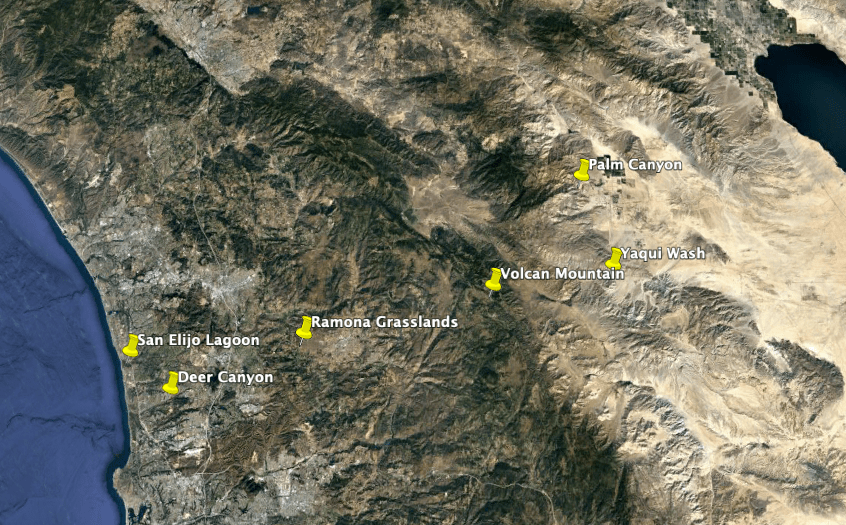
The white-winged doves woke us on Saturday morning in Yaqui Wash, a primitive campground in Anza Borrego, and we got started right away. Our binoculars revealed the black, crested silhouette of a phainopepla at the top of a tree. Summer tanagers swerved between shrubs in flashes of orange and yellow. We creeped about the mesquite trying to get a closer look at a flycatcher while noting the song of a cactus wren coming from a patch of cholla. All the while a raven watched us and croaked.
Next, a quick hike through Palm Canyon, near Borrego Springs. Black-throated sparrows greeted us near the parking lot. A few minutes down the trail and the song of the canyon wren reverberated off the canyon walls. A loggerhead shrike dashed by. In the palm grove, I saw my first black-throated gray warbler, my first warbling vireo and only my second Wilson’s warbler. As we sat on a boulder listening, the scratchy warble of the endangered least Bell’s vireo rang out louder than all the other songs. We sought verdins but found none.
After breakfast, we started our journey east into the mountains. The Volcan Mountain trail led us steeply into lush woodlands where we watched our first violet-green swallows building a nest in an oak hollow. Oak titmice called to each other through the canopy and a California trasher tilted its long, decurved bill, eyeing us suspiciously from a shrub. I could have stayed at Volcan Mountain all day for the woods and the wildflowers are enchanting this time of year, but the day was advancing faster than we were and we had to move on.
The Ramona Grassland Preserve has been one of our go-to birding spots this year. It has both birds and good coffee nearby. This time, we found none of the roadrunners we usually encounter there by the dozen, but the cliff swallows did put on a show. That show was the coordinated act of landing on the bank of a stock pond to collect mud for their nests. The swallows would approach from the west – about a dozen of them – flying above the pond for several minutes before diving one by one to scoop water into their beaks. Next they would begin their landing process, performing several touch and go landings on the muddy bank before finally all agreeing to land. On the ground, the swallows pecked at the soil, filling their tiny beaks with mud with both wings held straight up above their heads. And then they were done, taking flight and heading west across the grassland from where they had come, only to reappear a few minutes later to start the process again.
We skipped the coffee and pressed on westward. Short on time and with several more habitats to go before the end of the day, this was beginning to feel like the Amazing Race. We stopped at one of my restoration sites in Carmel Valley, which has both riparian woodland and coastal sage scrub, and where I knew we would find black-headed grosbeaks and California gnatcatchers. Whenever we go birding, my ability to identify birds by their song is rusty at first and then improves. As we walked the sycamore-lined trail, I stared at the ground and focused on listening, calling out the species as I heard them. There was the fluty song of the grosbeak in the trees to my right. To my left, a wrentit called out in a series of accelerating pits like a bouncing ball. Overhead I could hear northern rough-winged swallows, and above them white throated swifts. Hiking uphill into the shrubs, we spotted a bushtit and heard the rest of its straggling flock of tiny friends, and then finally, from somewhere downslope, the kitten-like mew of the gnatcatcher.
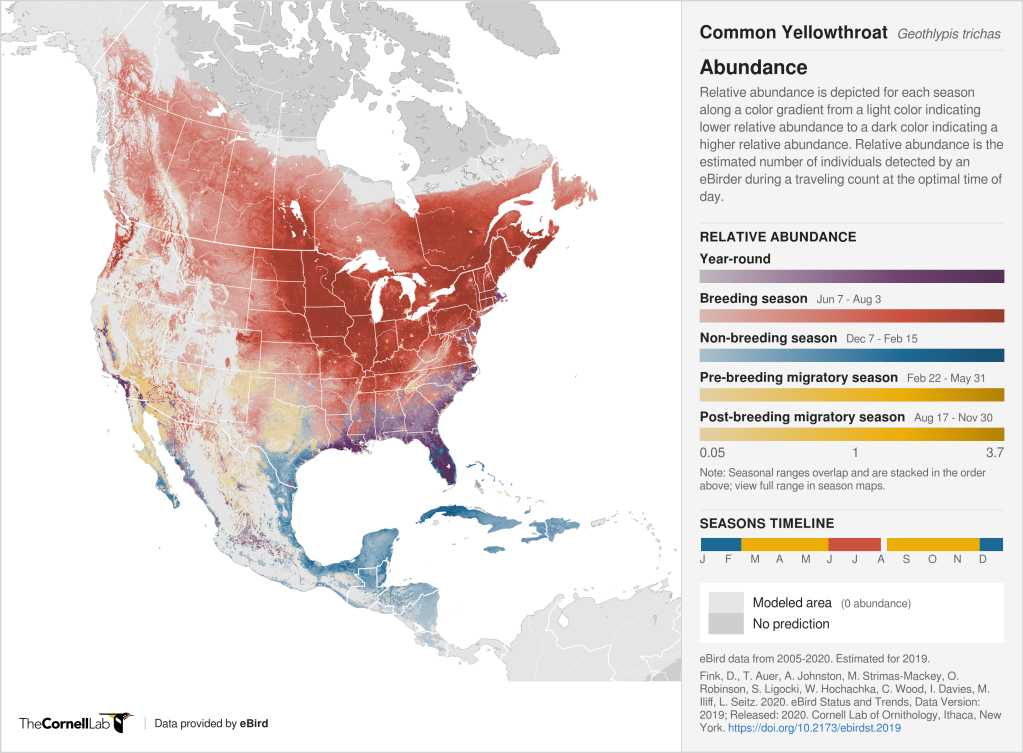
Our last stop was the San Elijo Lagoon where we spotted the tiny red-necked phalarope (another first) and heard a common yellow throat, a species that always gives me great joy to see. We wish we could have made it to the beach, where we would have been certain to see several more species, but we were already late for a birthday picnic up the coast. Not going to the beach is the reason our bird list that day excludes such common birds as the brown pelican and the western gull. Leaving the lagoon, we passed by a California least tern nesting site and for a brief moment, glimpsed several adults take flight.
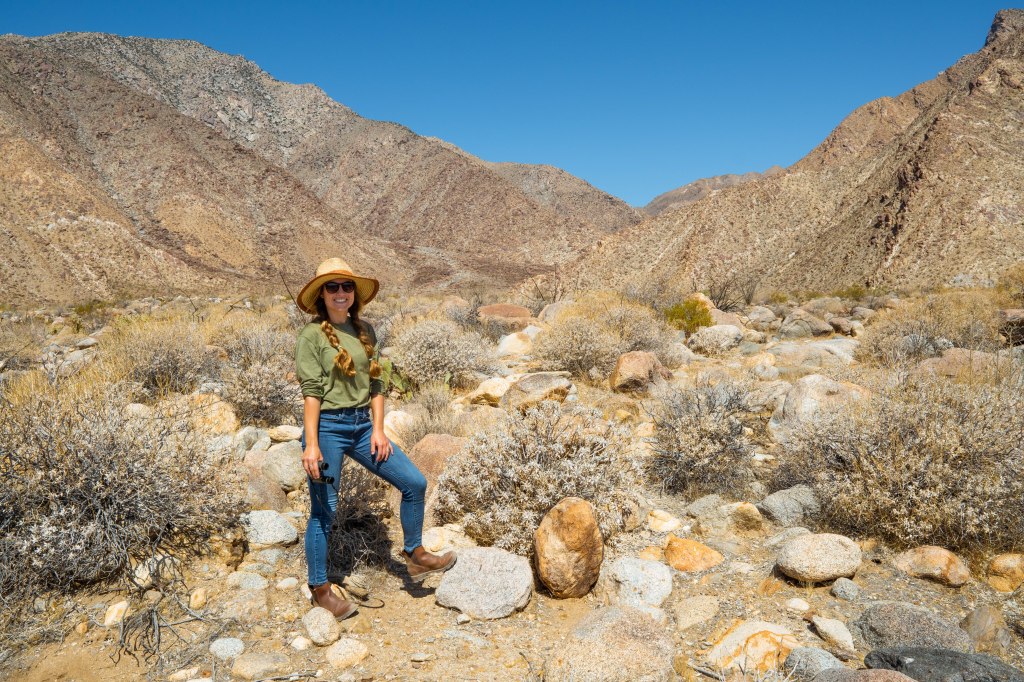
At the Palm Canyon trailhead, Anza-Borrego 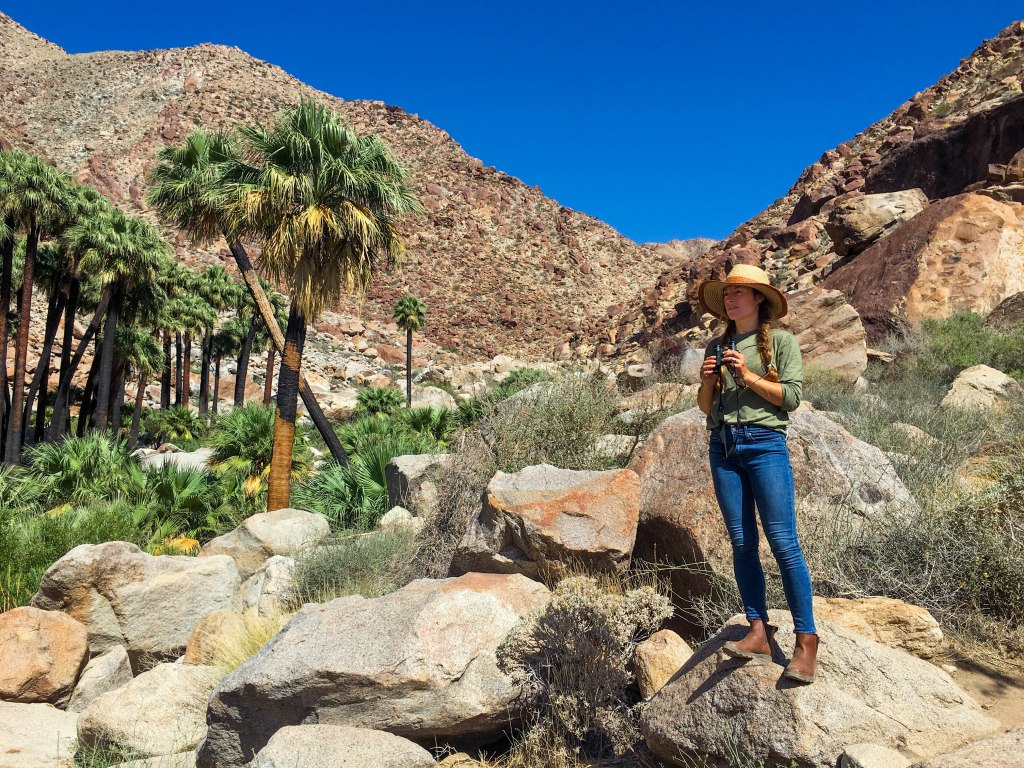
In Palm Canyon, Anza-Borrego 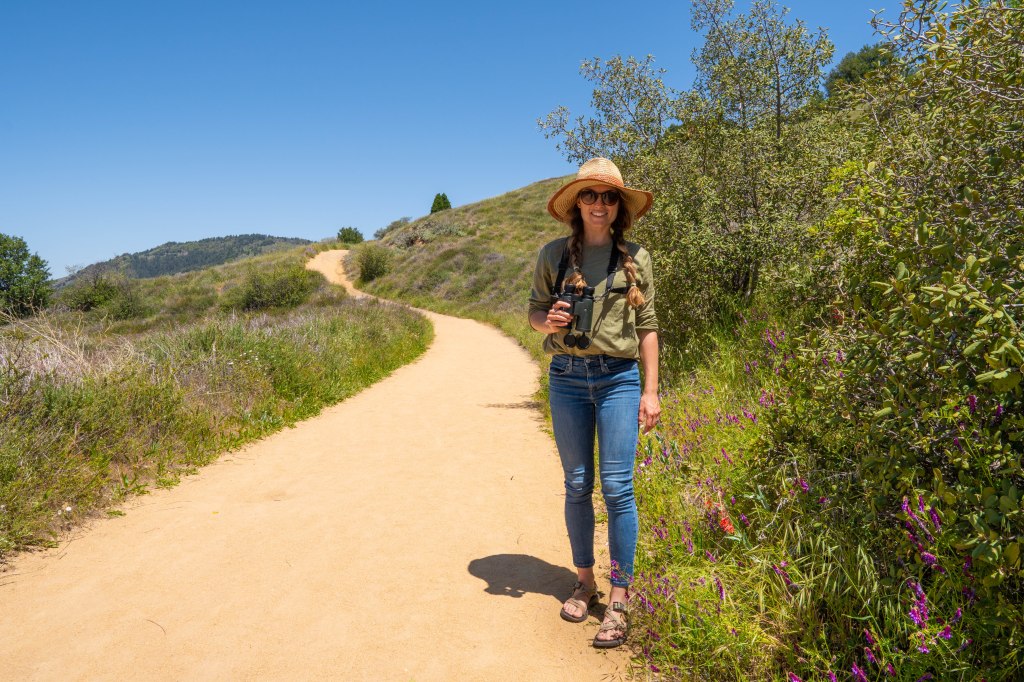
Many wildflowers along the Volcan Mountain trail 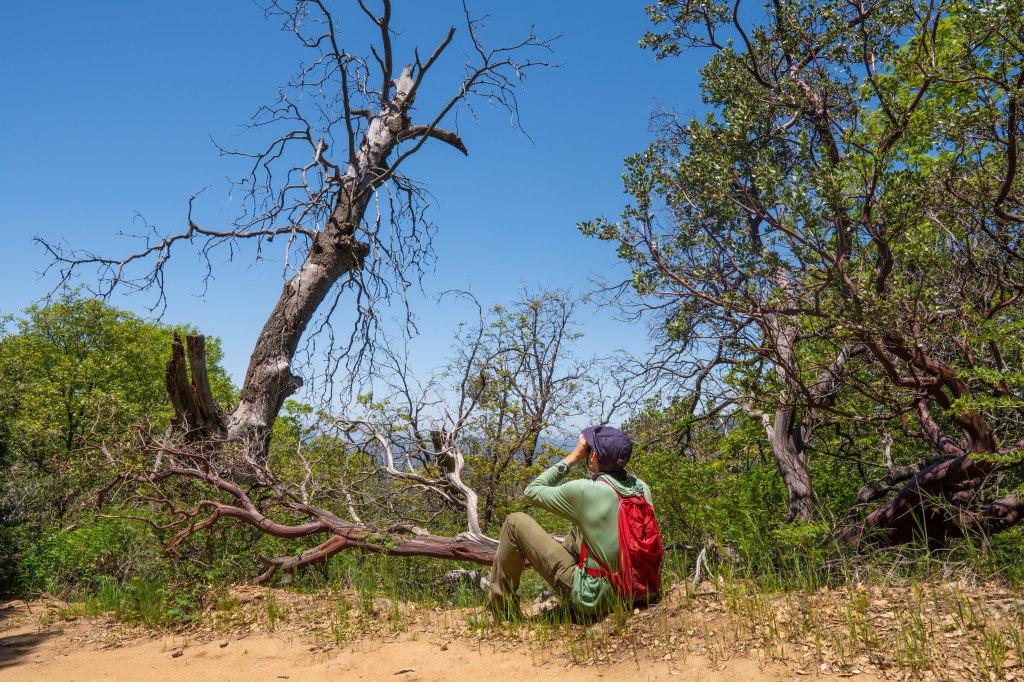
Observing violet-green swallows at Volcan Mountain 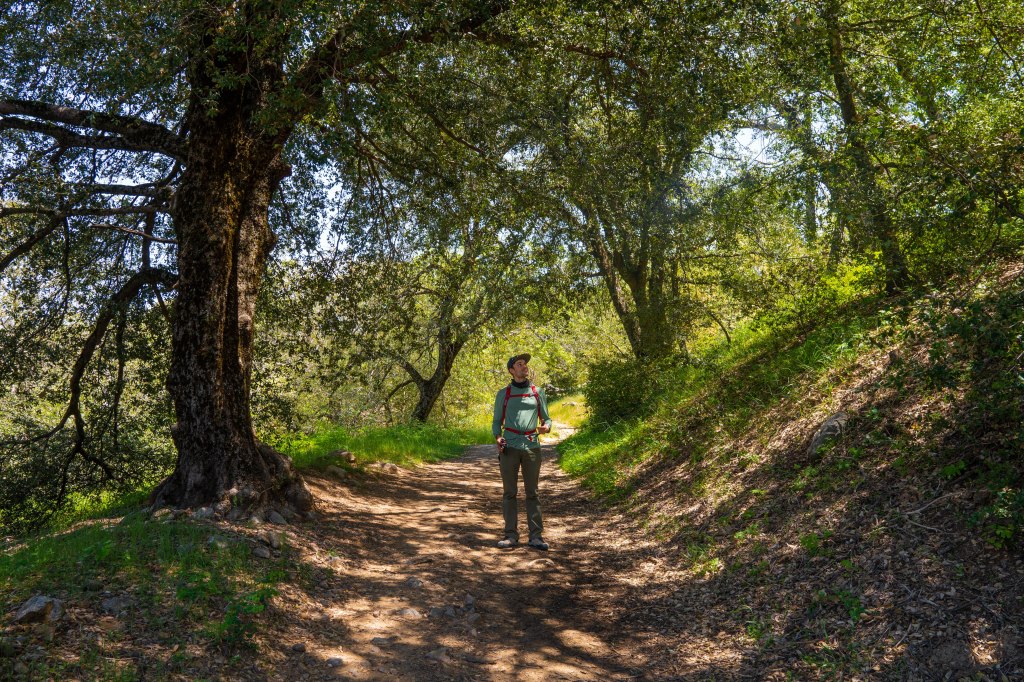
A piece of oak woodland at Volcan Mountain 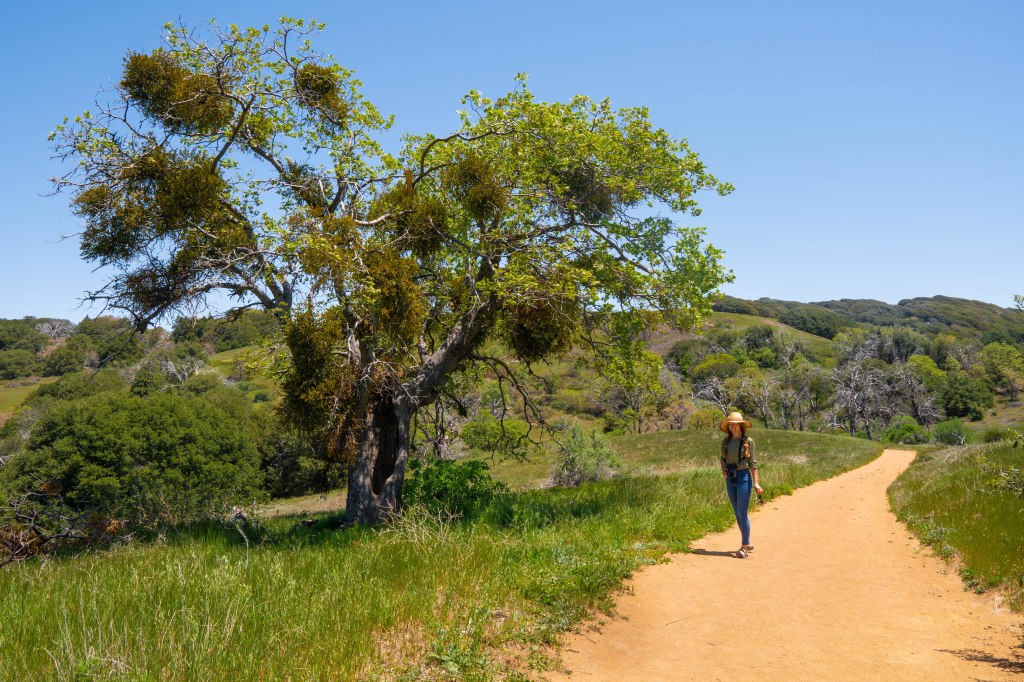
Volcan Mountain 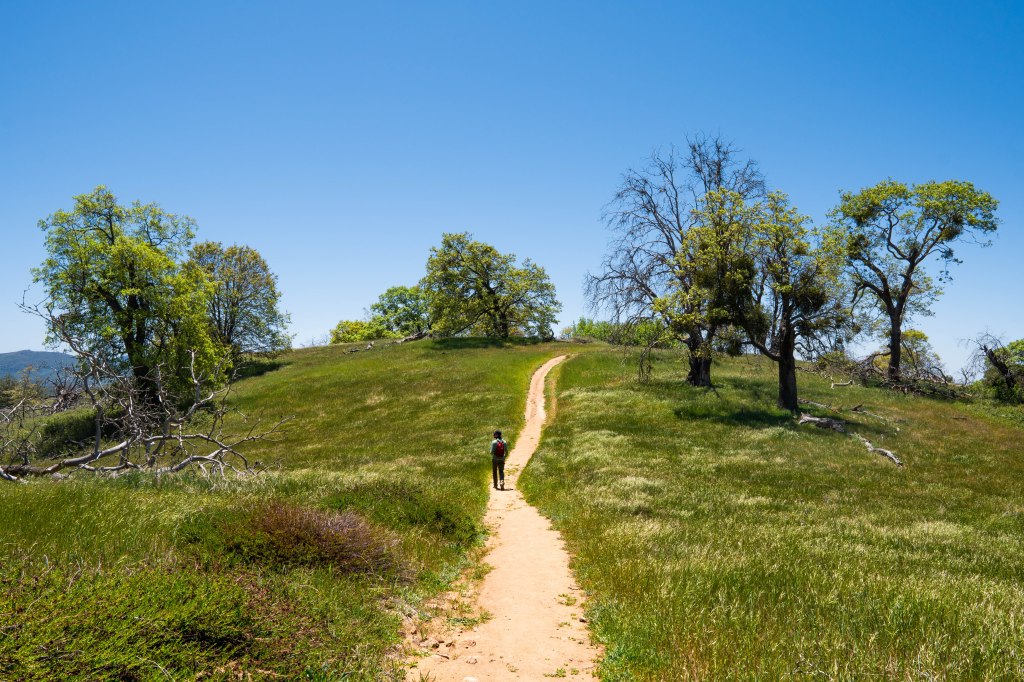
Volcan Mountain 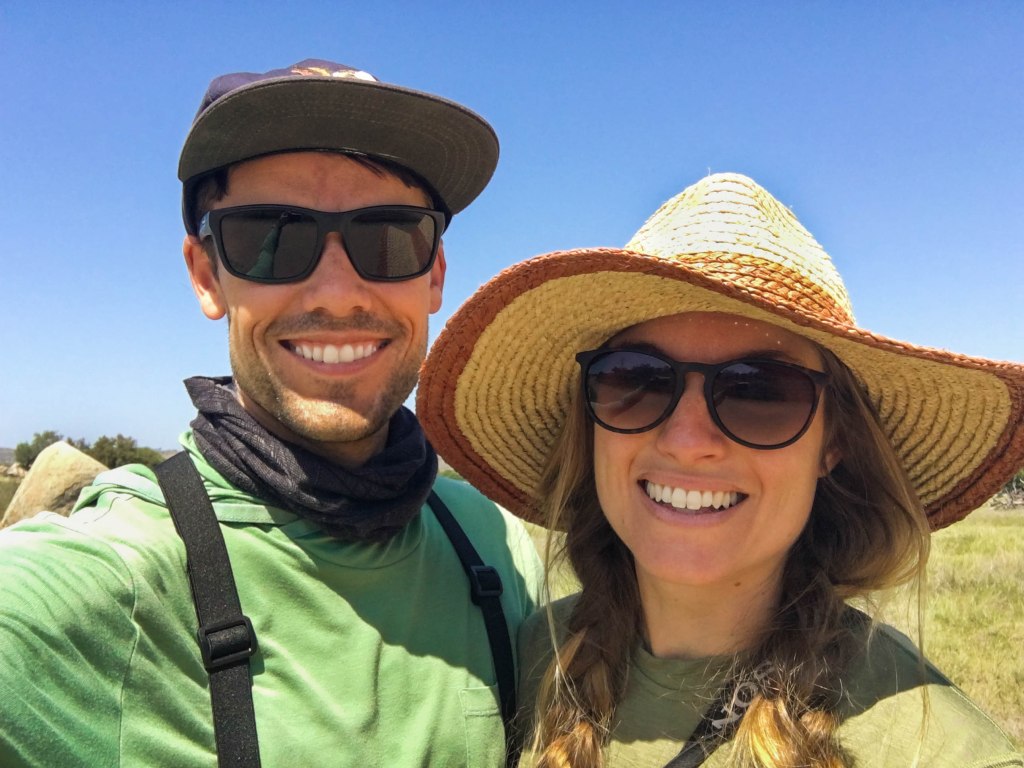
A team selfie at the Ramona Grasslands 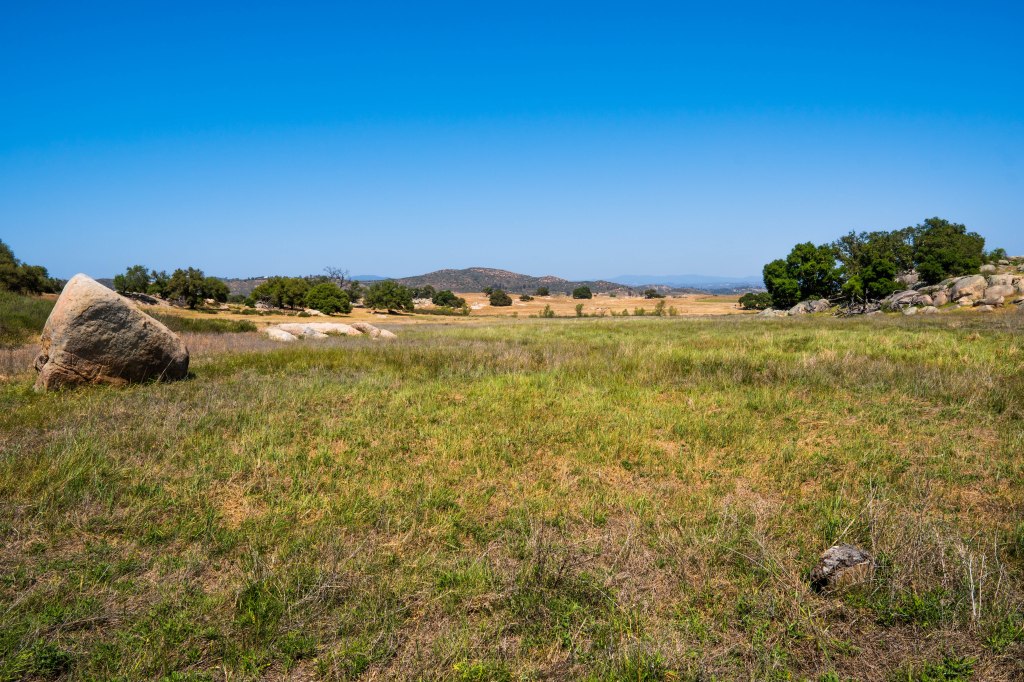
The Ramona Grasslands 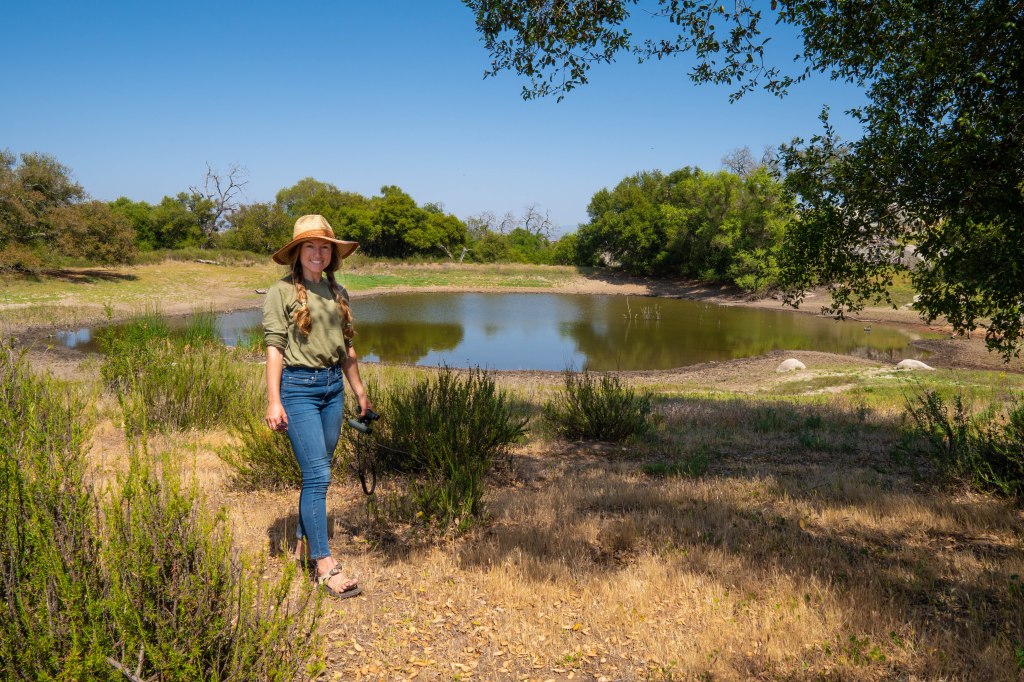
Watching swifts at the Ramona Grasslands pond 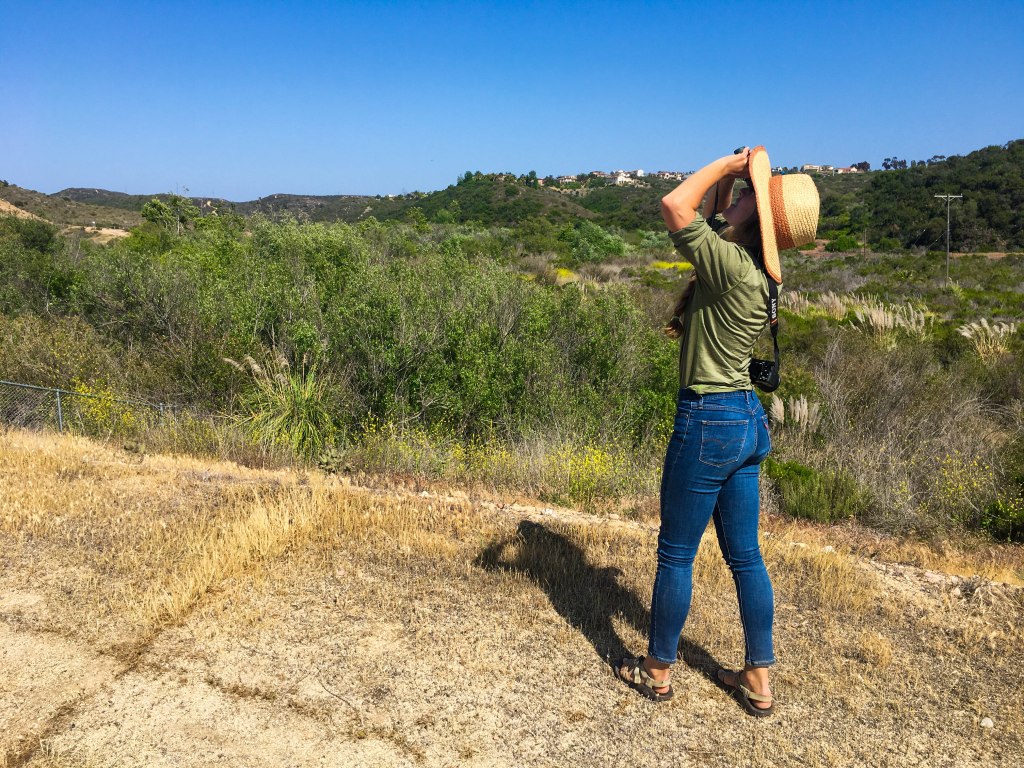
Birding in Carmel Valley, which features riparian and coastal sage scrub habitat 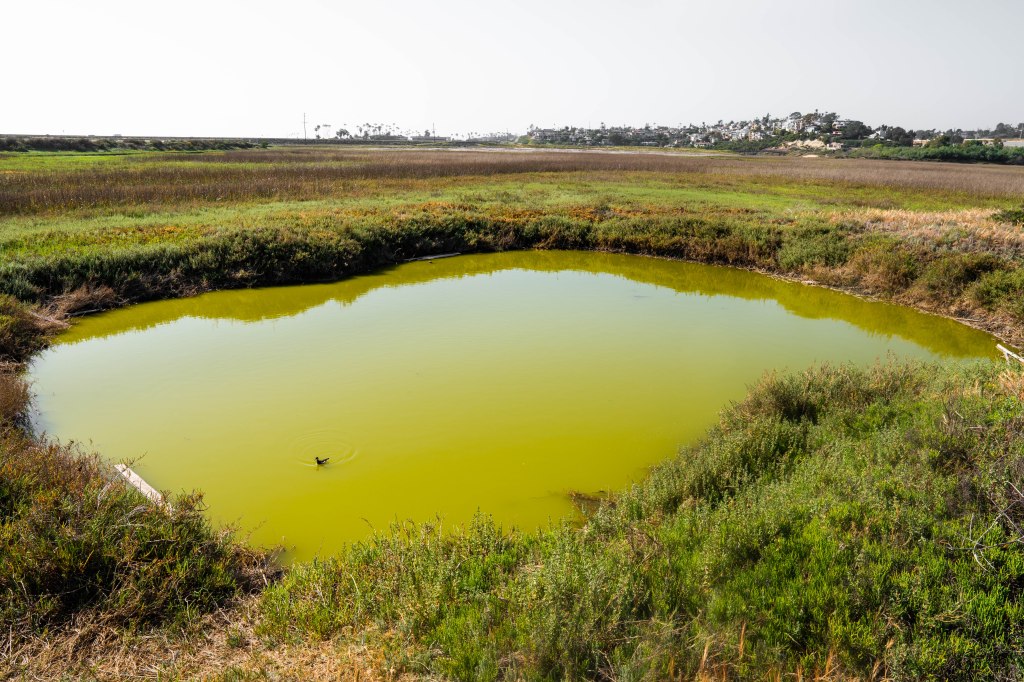
One of two phalaropes observed at the San Elijo Lagoon 
Overlooking the San Elijo Lagoon
Our final count was 65 species. It was well short of the hundred or so I was hoping to count, but it is a base to build upon next year. Perhaps what I found most satisfying from the experience was confirming how each habitat yielded a nearly completely new bird list.
Something I thought about during the day was that, while the timing of Global Big Day in May coincides with breading season when birds are more active and chatty, it also means we miss out on the many species of birds that only visit our region in the winter, when they descend from their summer breeding grounds in the arctic. A fun exercise would be to replicate our Big Day in the winter, and compare lists.
Our 2021 Global Big Day Bird List:

 Stars, like salt.