A late summer outing to Santa Rosa Island
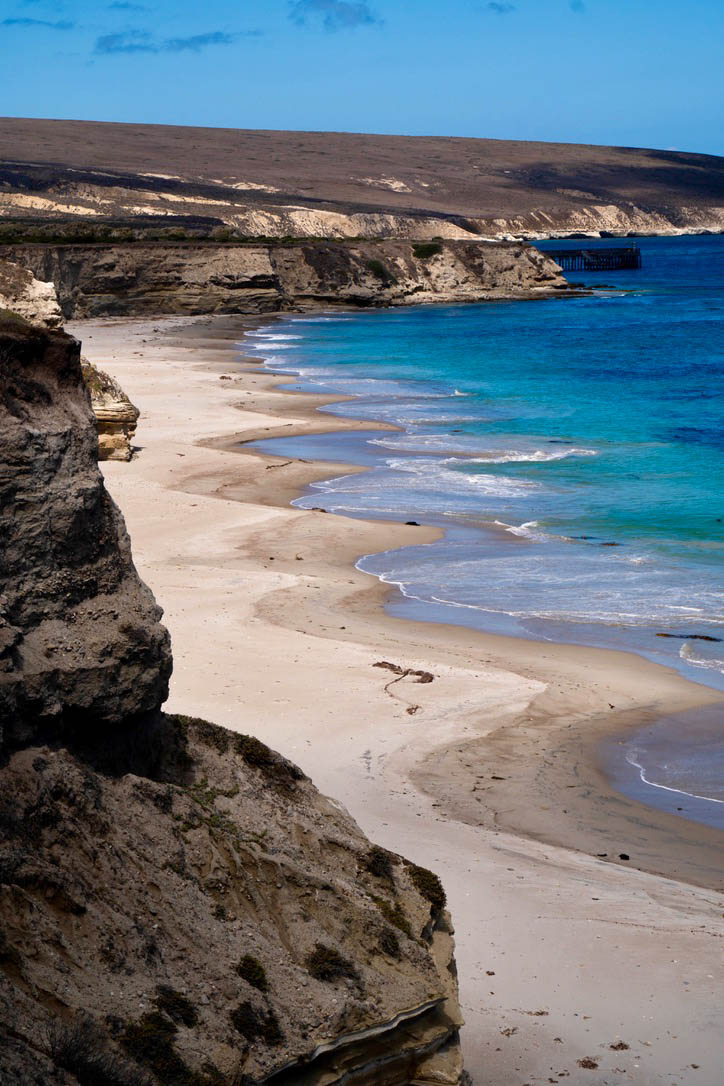
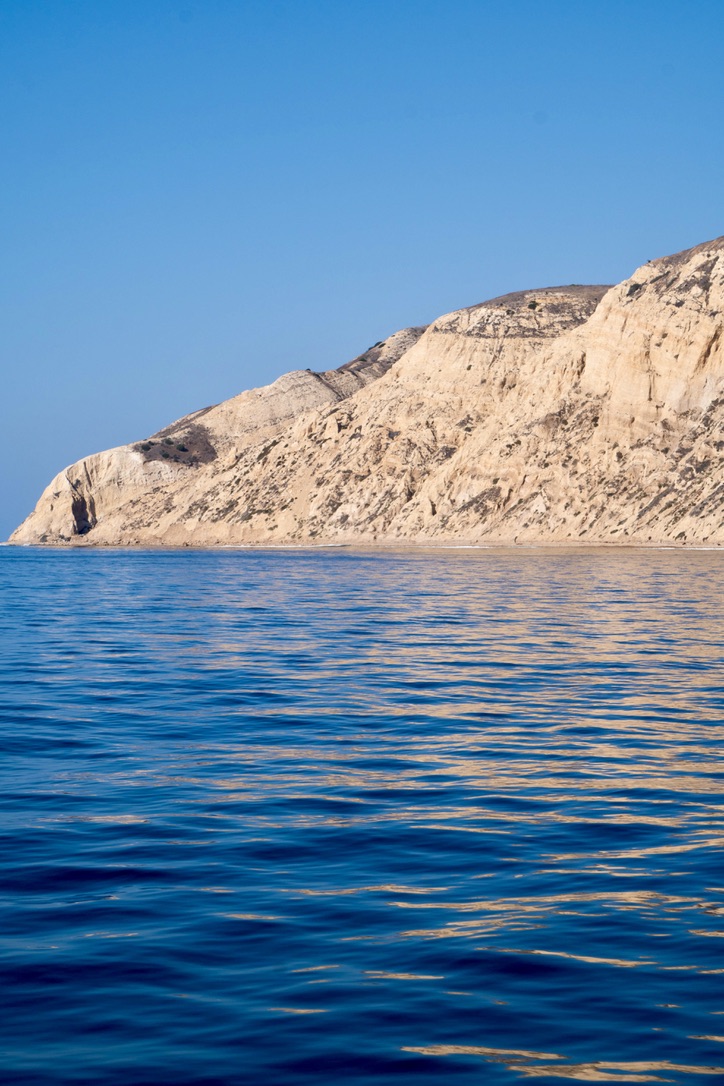
Water, wind and sunlight are the prevailing elements out here among California’s Channel Islands. All is scoured, bleached, or blue. Look at aerials of the outlying islands, Santa Rosa and San Miguel. Can you see the long, parallel dunes stretching across the islands like filaments? The dunes suggest a strong and steady breeze.
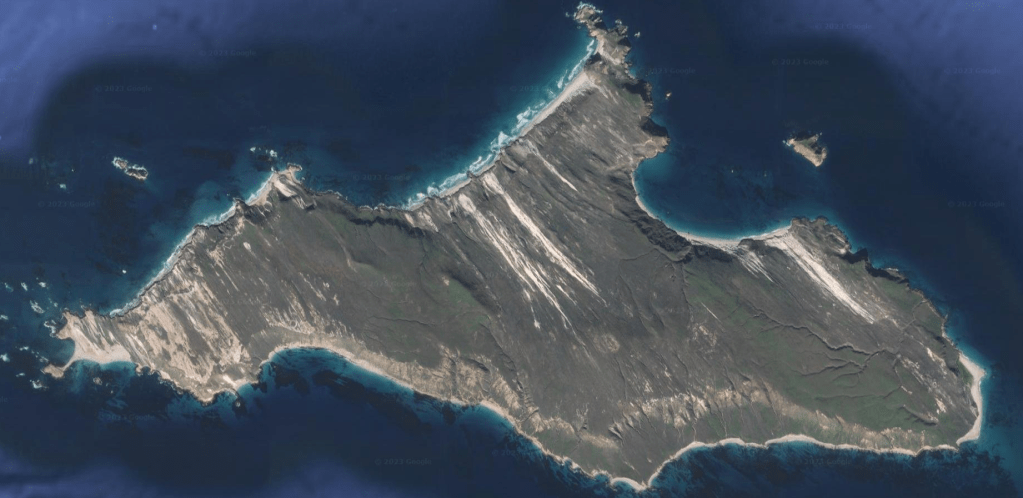
Above: San Miguel from the sky gives the best example of wind-stretched dunes
The gusty ferry ride to Santa Rosa Island lasts three hours with stops for dolphins and to scoop balloons from the water. We stand at the bow the entire way, wind blasting our faces, elated. The only break comes along the sheltered southern side of Santa Cruz Island where the breeze dies and the water instantly relaxes. With so much wind, it would have been wise to adjust our expectations for the trip. But we’ve spent weeks imagining an easy beach weekend and we stubbornly hold on to that vision.
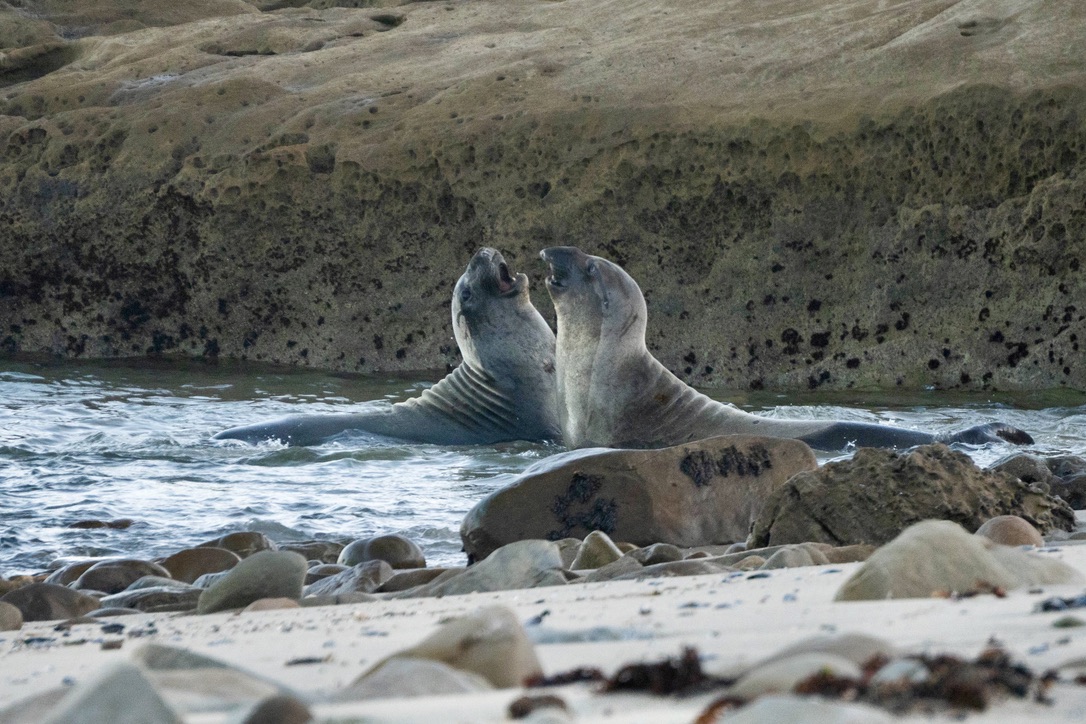
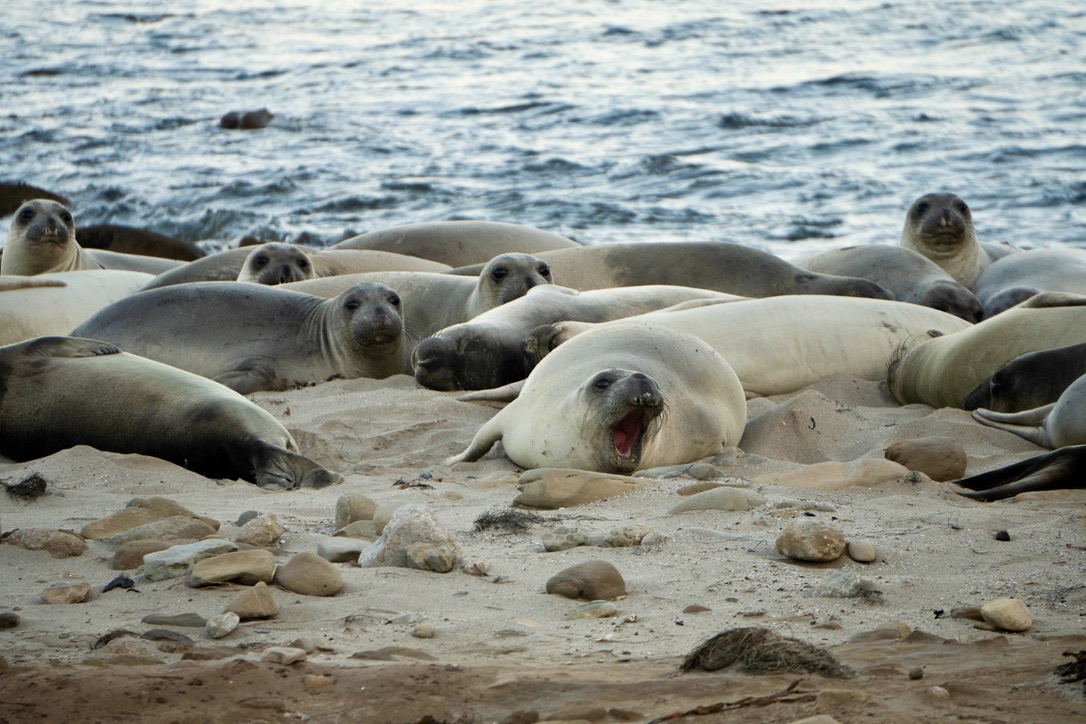
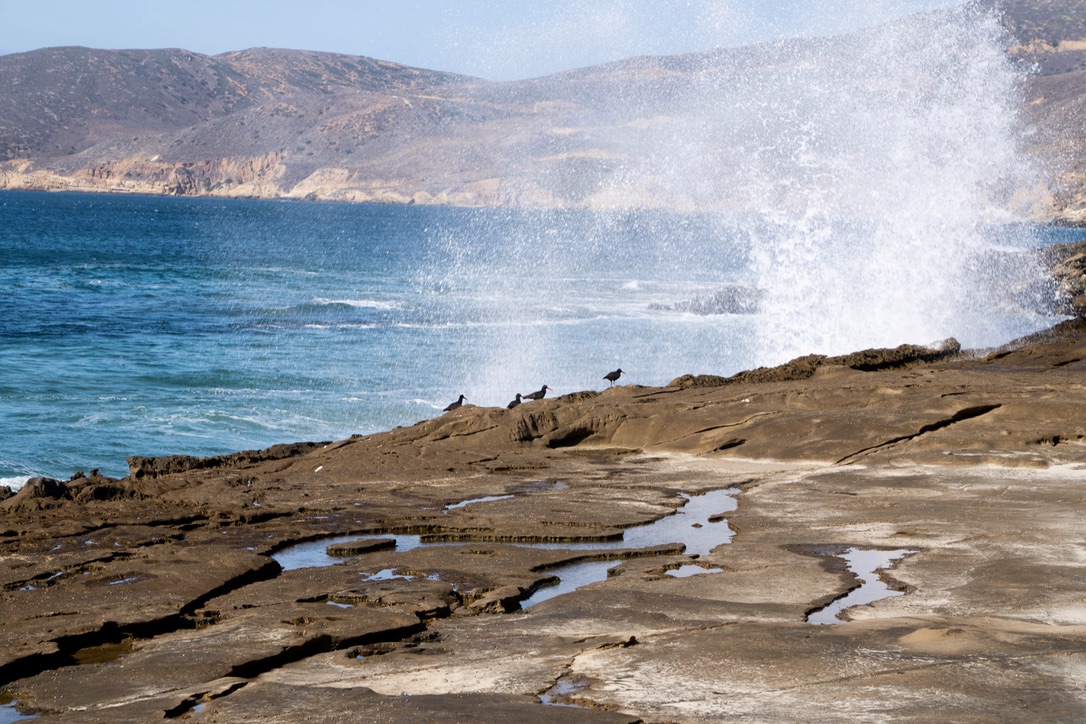
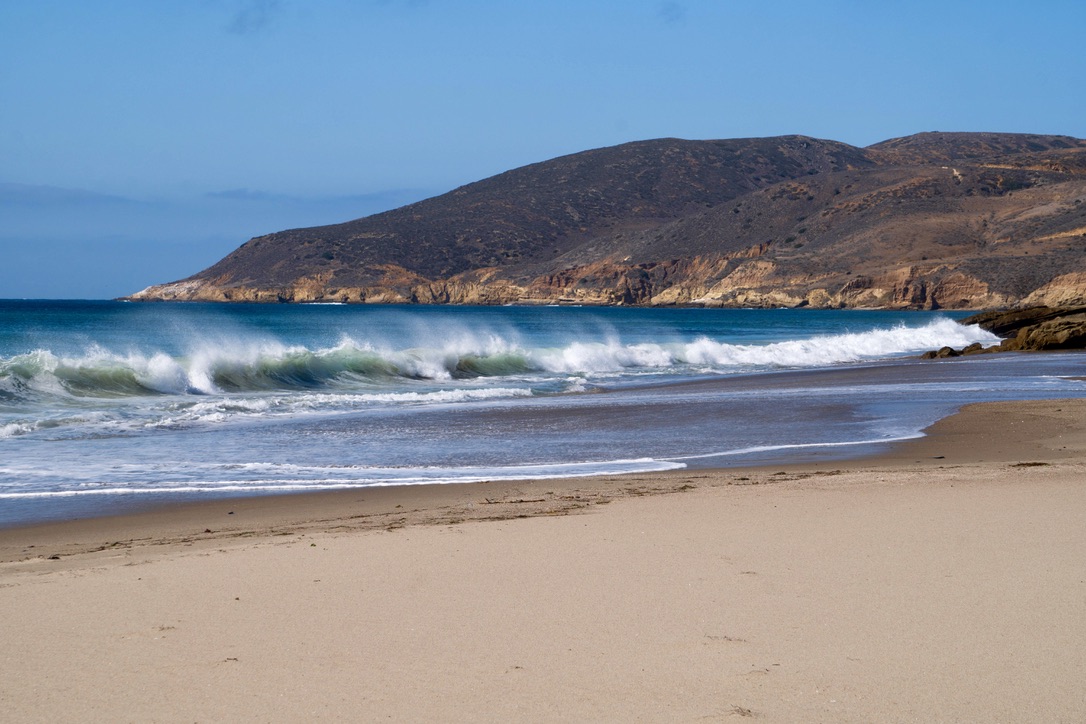
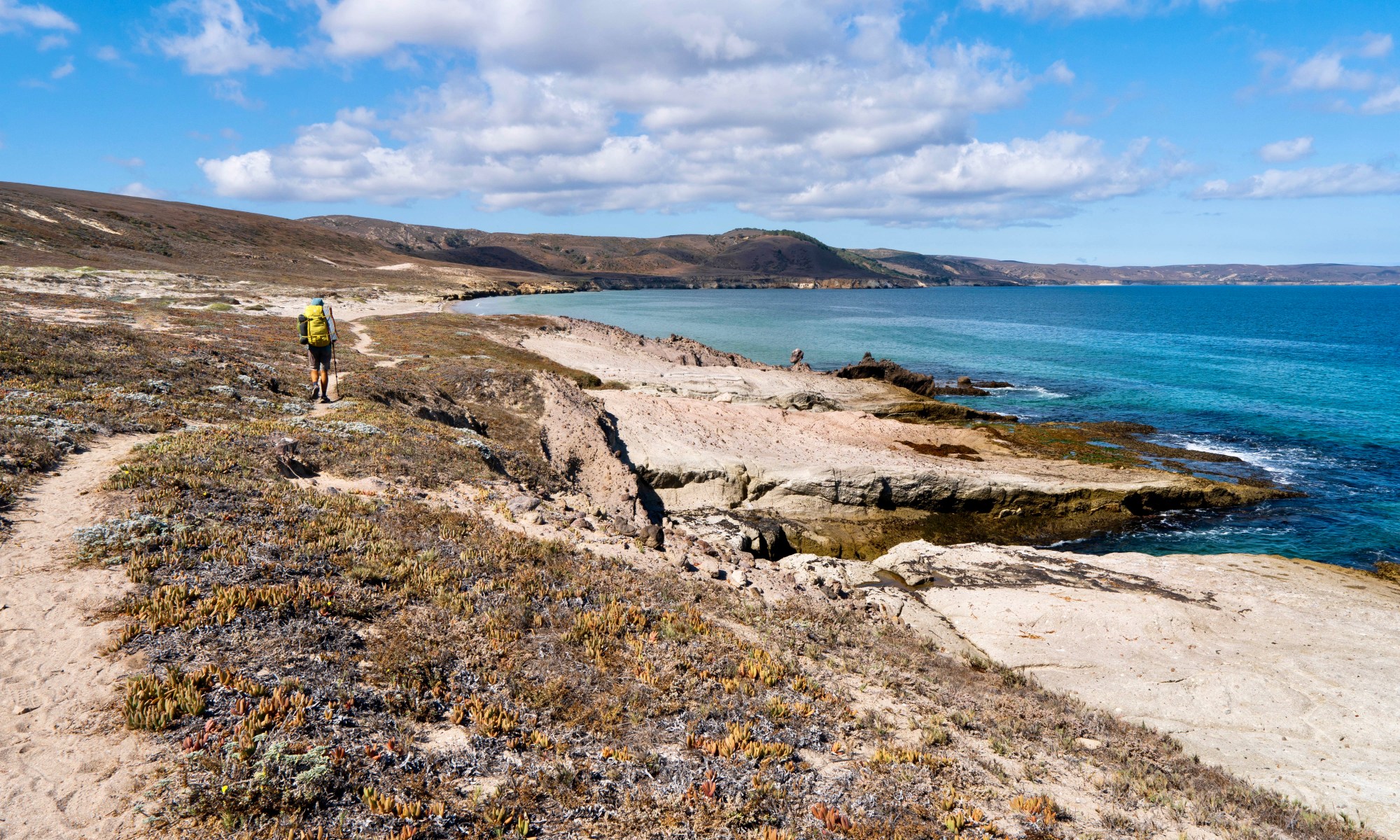
It’s a long walk from the wharf to the south side of Santa Rosa Island where we can camp. Our packs are heavy with water for there is none near the beaches where we will sleep. Park rules say camping should be done on the sand. When we arrive at sunset, tired and sore, every inch of suitable beach surface is occupied by elephant seals. We settle for flat ground at the mouth of a narrow canyon nearby.
Night falls; we make dinner. Two male seals terrorise each other in the surf. Otherwise all is calm until suddenly the wind rallies and it’s clear the canyon was a poor place to shelter. Eric hurries to hammer in more stakes. I stand to catch a sock and the wind steals the foam pad I had been sitting on. In the beam of my headlamp I watch it go from full size to stamp size in an instant, never touching the ground. I frantically secure the rest of our belongings including the stove then run after the mattress. I find it sailing on the mucky surface of a fetid lagoon and pry it out with a stick.
Dinner is finished in the tent, which threatens to collapse. We tuck into our sleeping bags but it’s difficult to settle down. The gusts are so forceful they invert the arched tent poles so that the ceiling is an inch above us. It feels like the tent is trying to suck off our faces. The commotion exacerbates other worries: that we don’t have enough water, that an elephant seal will crush us in our sleep, or that I’ll be too sore to make it back to the ferry on time two days from now.
This is not the relaxing vacation we had envisioned. I know it’s up to me to flip my expectations for there is nothing else I can control. Eric goes outside to tighten the guy lines and the tent rips abruptly with a bang. We look at each other through the gaping hole in the fabric. It’s an absurd moment. The wind seems to lessen its wrestling with the tent, moving through it more easily now. My own struggle dissipates. We sleep excellently all night amidst flapping shreds of tent fly and snorting seals.
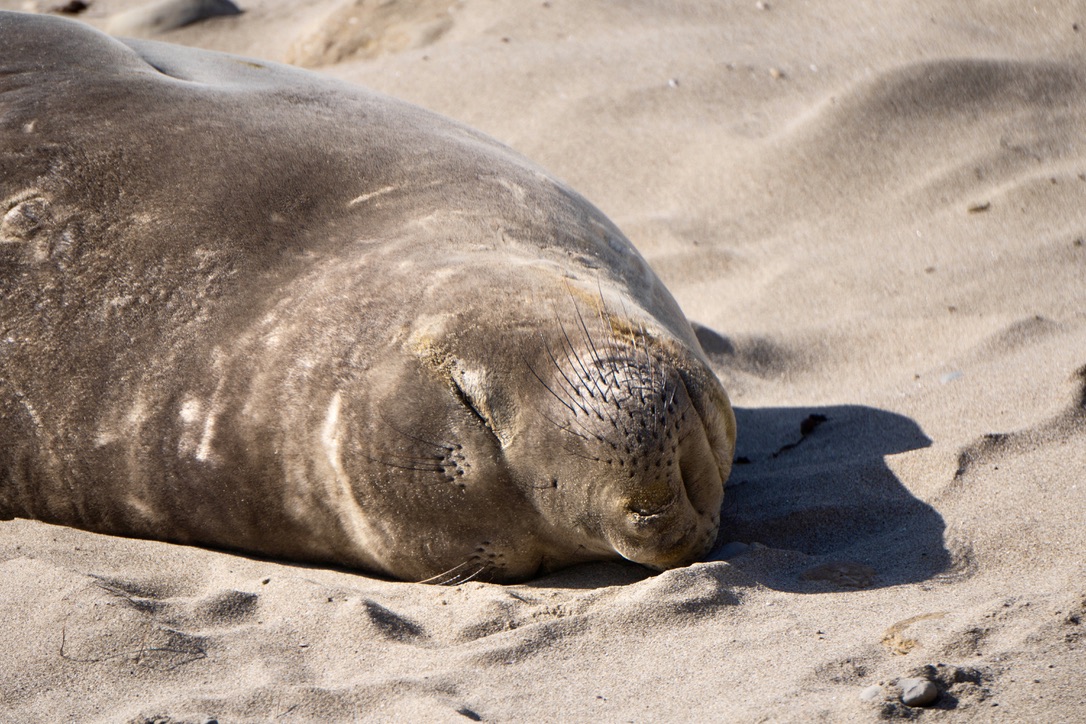
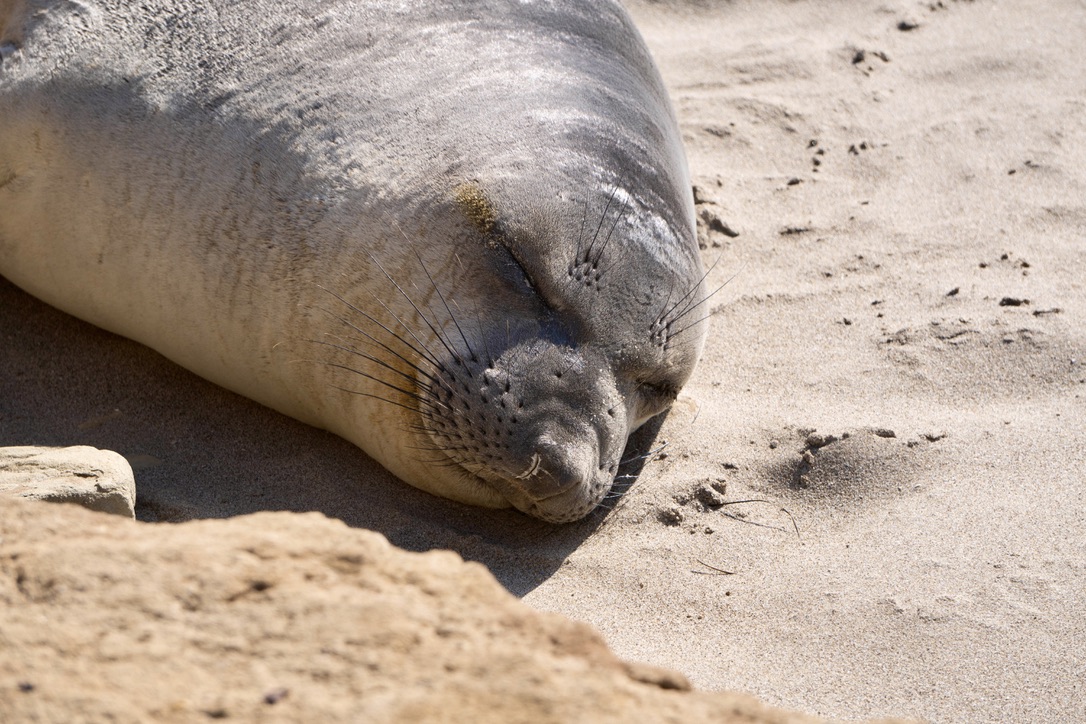
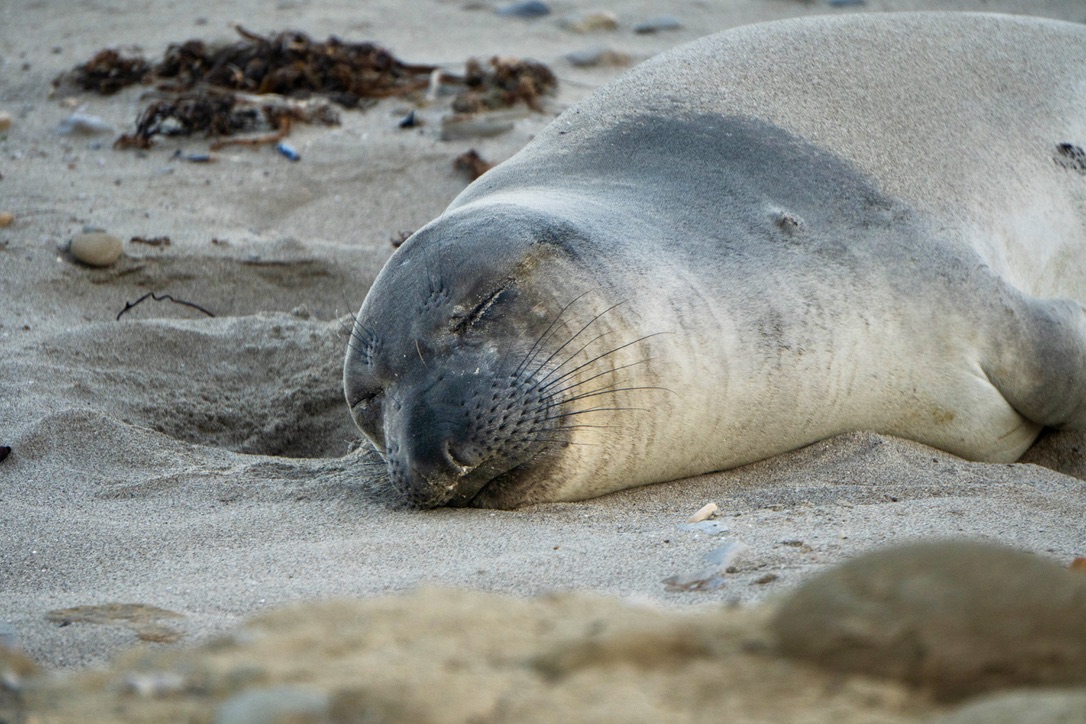
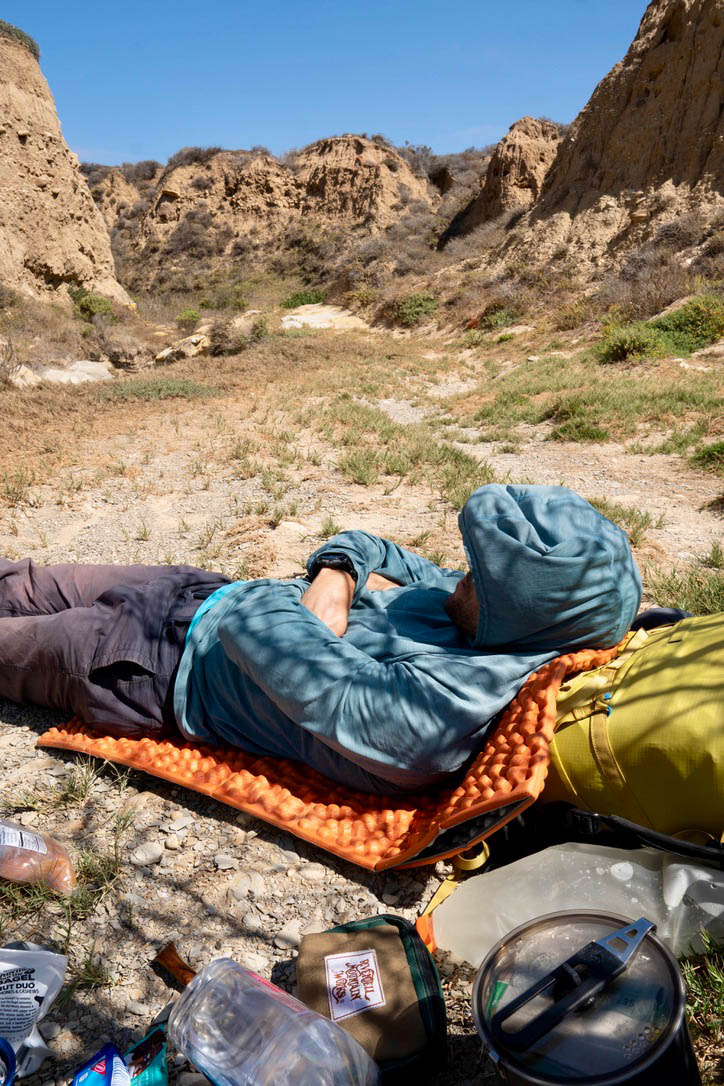
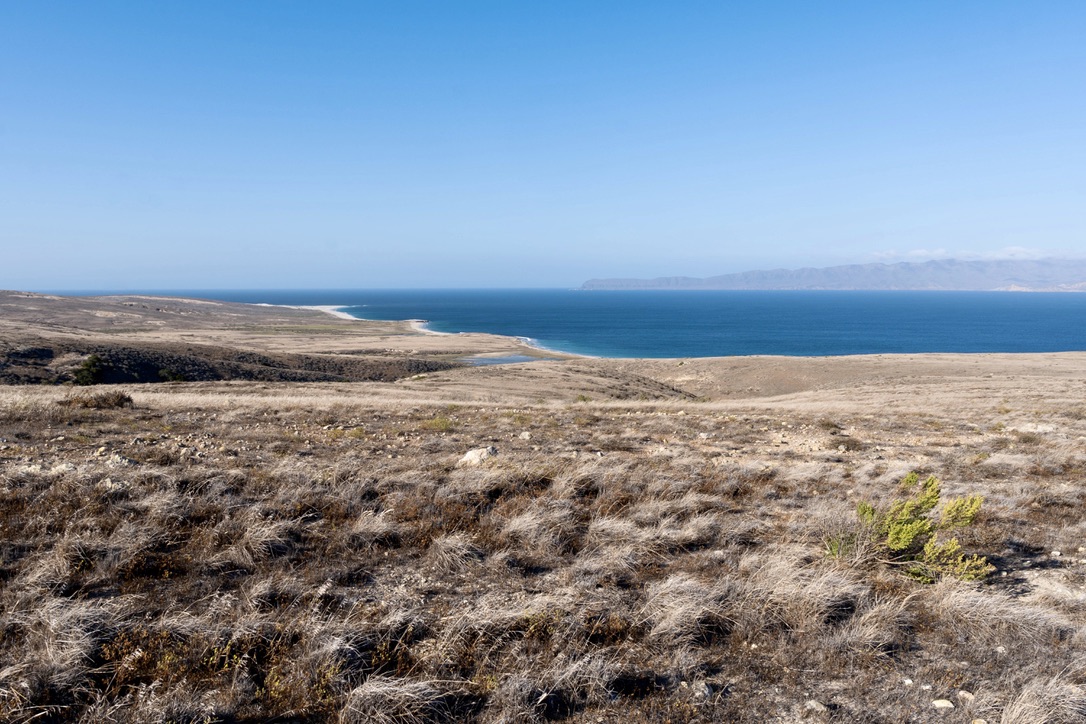
Morning is calmer. There’s a seal snoozing steps from us. We stow our belongings and venture up the coast, stalking oyster catchers between rock pools. The beaches out here are expansive. We slide down a dune into cold water.
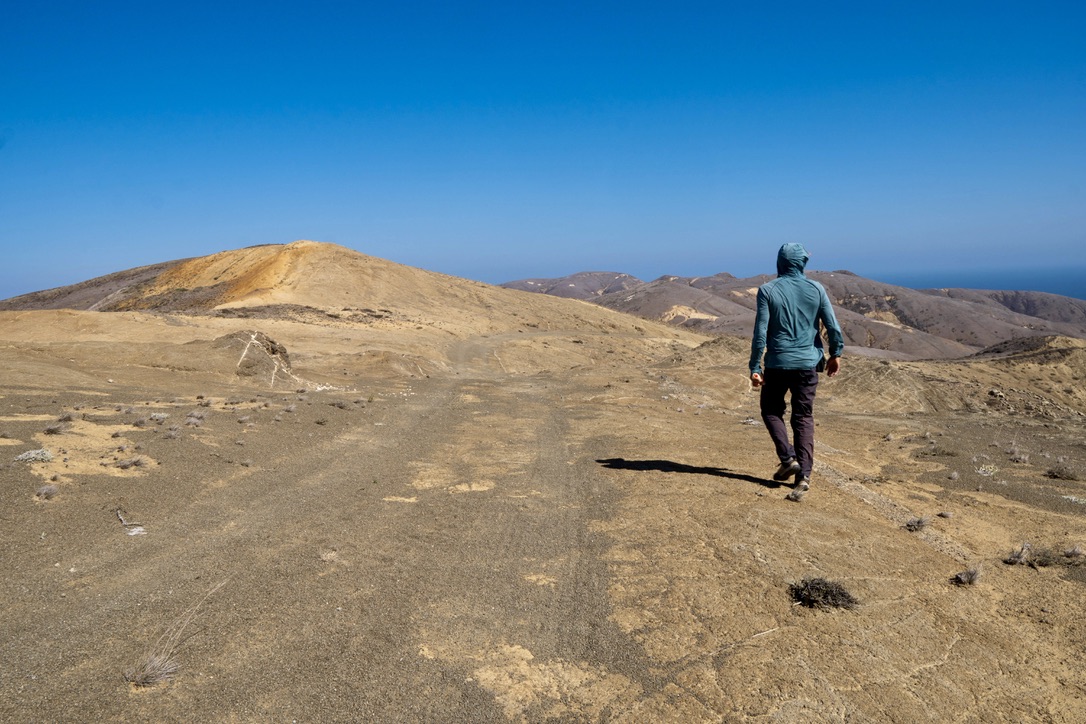
We move to a new campsite on the island’s southeastern corner after breakfast. There are few trails and they are frustratingly indirect, following long and winding ridge lines. Around midday we spot the only spring a short distance across a valley but it will be several miles to get there if we continue to follow the trail. We’re hot and thirsty. It is tempting to cut across the valley off trail, but the way down is steep and we can’t see the bottom. The shrubs look sparse at first but it is likely they will thicken. It’s worth the gamble. Half-an-hour later, we emerge from the valley onto the opposite ridge line directly below the spring. My legs are so scratched they’re bleeding but my mood is much improved.
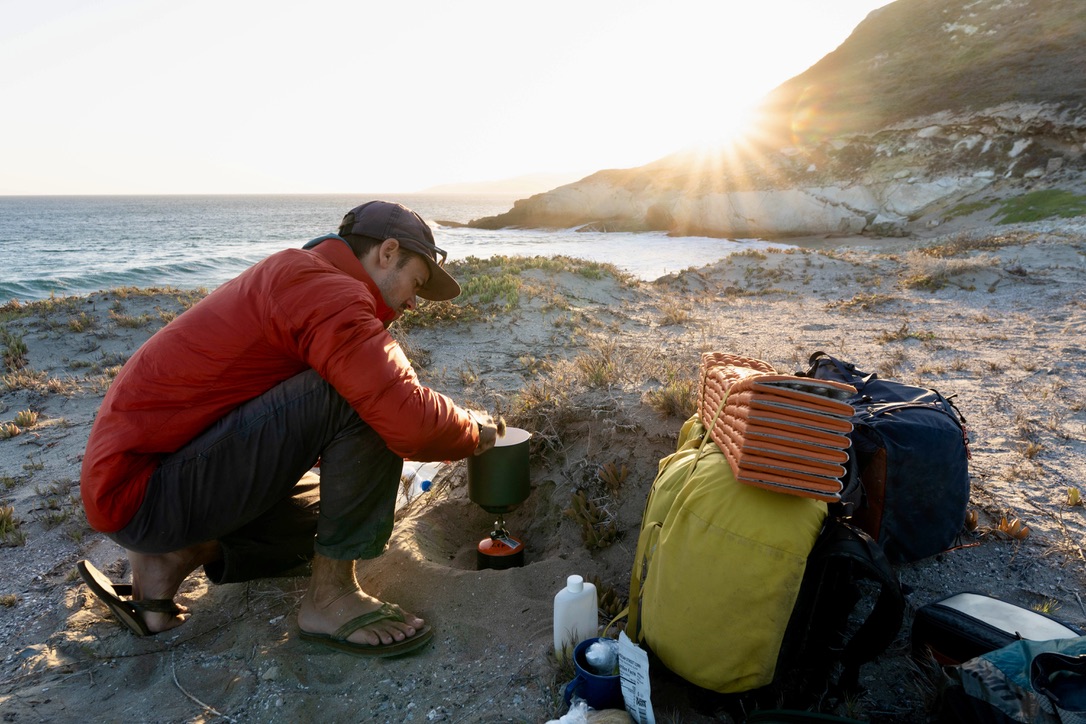
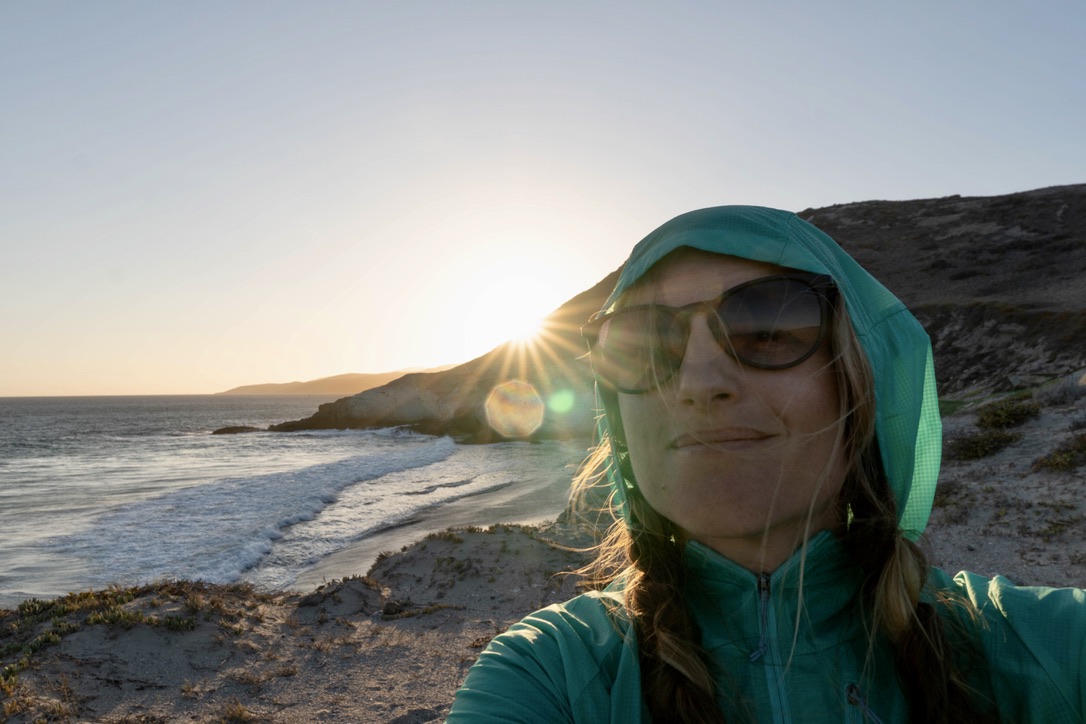
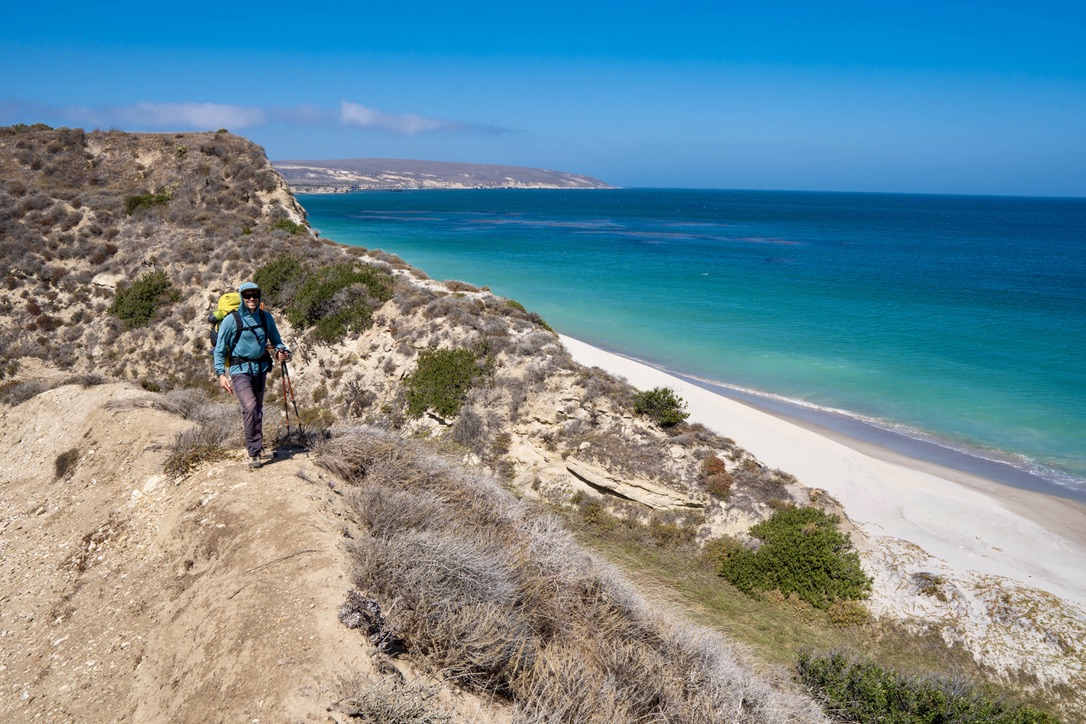
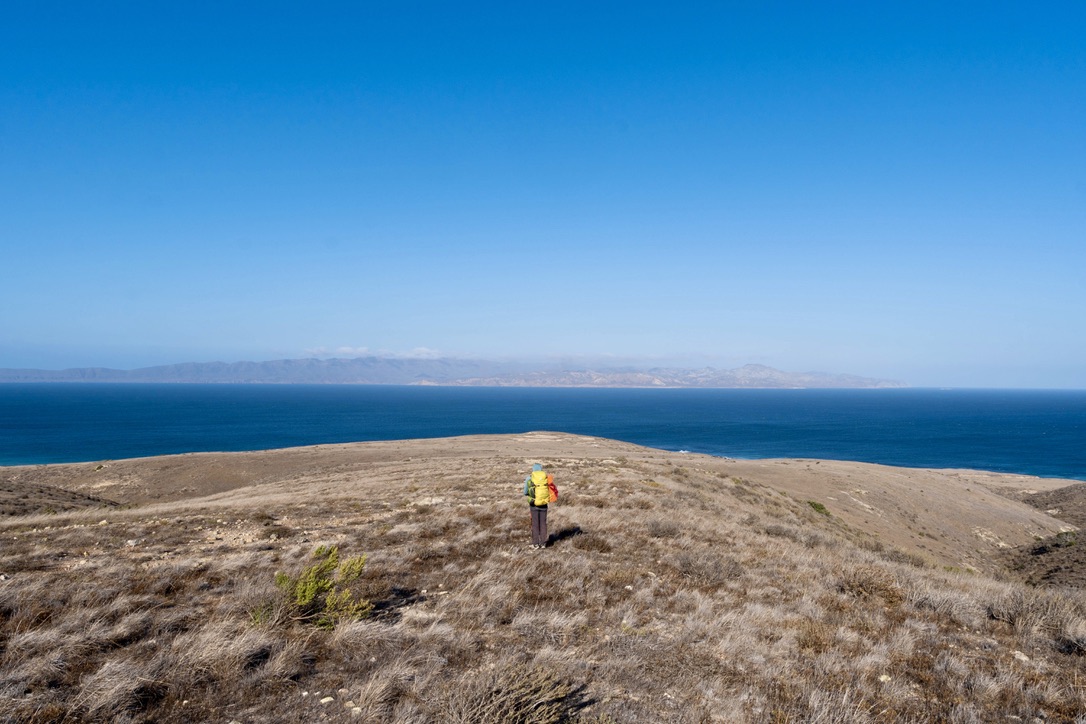
From the ridge tops the earth appears to tip away in all directions into the sea. Along the eastern coastline where the sand is whitest the clear water is impossibly turquoise. It’s the dry season. The plants are dormant but recent wildflower blooms are evident everywhere. I make note of the species I can approximate from crispy flower heads and seed pods and promise myself I’ll return in the spring.
In this place, land, water and wildlife are abundant. We follow and observe its creatures, trying to get to know them. Tiny island foxes bound among the grasses, hunting. Strange tracks, like a large bag has been dragged over the beach on a looping path, eventually lead to more sleeping seals. I want to photograph a vermillion flycatcher that Eric has found but I need to get closer and there is nothing to hide behind. Instead, I take a few steps towards the flycatcher’s perch each time it drops to the ground for a cricket. I do this until I’m crouched just a few meters away from it, in plain sight.
A leisurely beach weekend was what we thought we wanted. What we needed was this, the wildness. We need the wind, the ripped tent, the bleeding legs, the wildlife, the scale. They show us what’s real and what matters. There’s no addictive technology. There are none of the issues we navigate as downline participants in a society that sometimes feels like a pyramid scheme. And as I regard this place and think about why I’m here, I also wonder about the people who were here first.
The Chumash called this island Wima after the redwood logs that washed ashore and that they used for their canoes. What was it like for them to live here? What was it like to live at a time when the link of dependence between people and the land’s resources was so observably short? The Chumash thrived on this island for thousand of years by paying attention and learning to give to the land so that it would in turn give back.
We talk about a relationship of interdependence between native people and the land, but the word relationship is ill-adapted because it assumes an association between separate things. Indigenous Californians didn’t teach each other that they were different from nature, like my culture does. In the language of the Kumeyaay people of San Diego and northern Baja, for example, the words for land and body are the same: ‘mat. What was it like to be alive when the kinship between people and land was an established fact, when feeling connected to nature was normal, not eccentric?
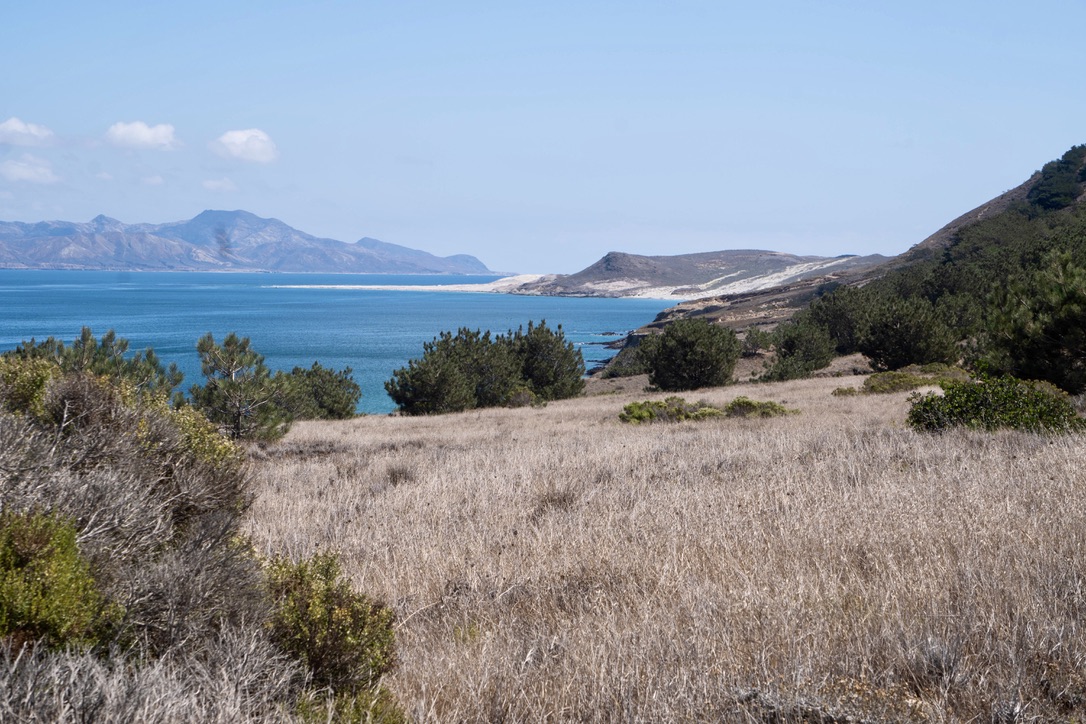
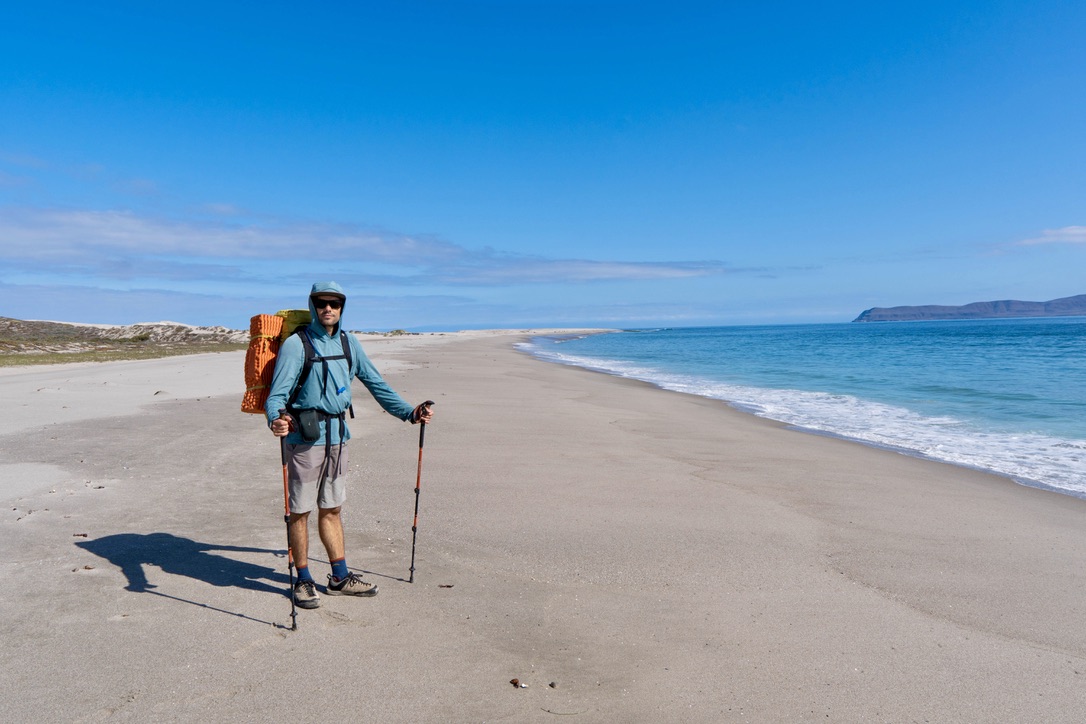
On the last morning the wind vanishes. The way back follows empty beaches for miles. We have plenty of time to swim and to picnic in a grove of Torrey Pines, one of only two such groves in the world. From our lunch spot we watch our ferry sail by us on its way to San Miguel, signalling that we have two more hours before the boat returns to get us.

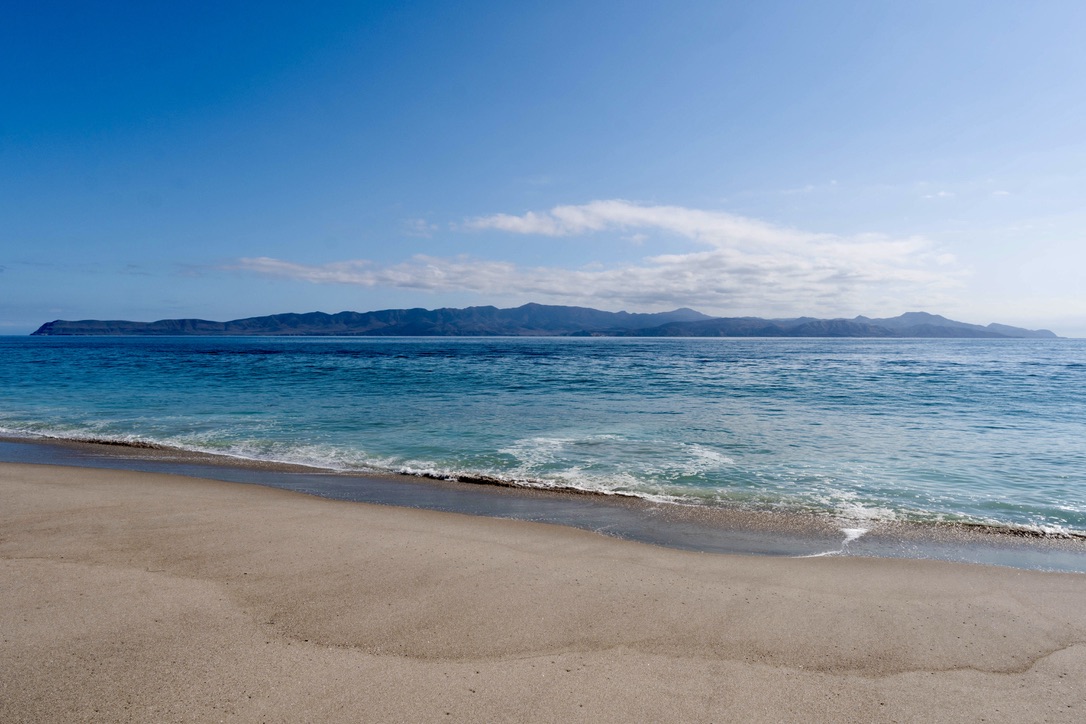

The ferry trip coming here was turbulent but now the sea is slack. This time we journey along the north side of Santa Cruz Island. The captain slows and steers the boat towards an opening in the cliffs. We cruise quietly into a sea cave like a throat. No one speaks (captain’s order) so not to disturb the bats and the serenity.
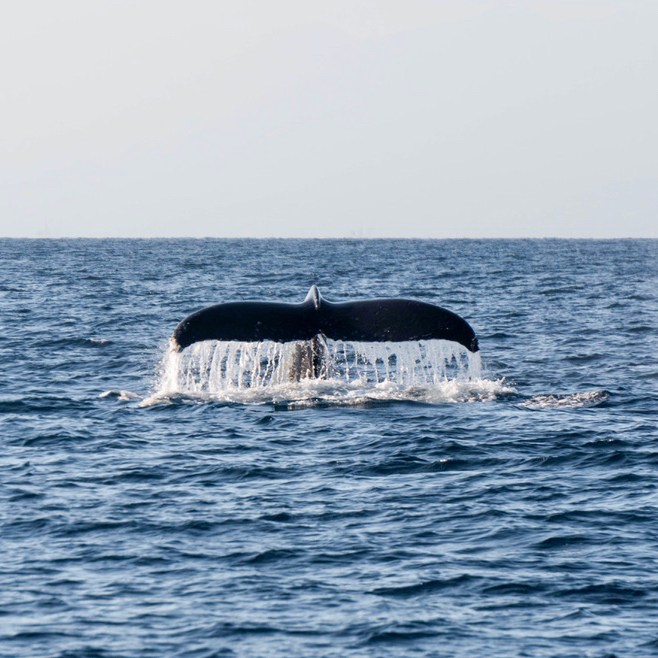
Water rich with nutrients wells up from the depths of the channel that separates the islands from the mainland. Those nutrients support plankton, which are the foundation of an immense food chain. As we leave the islands and enter the channel, our boat’s engine noise draws hundreds of dolphins from all directions. Their jumping silhouettes approach for minutes until finally they are all around us, surfing our wake in rows of ten or more dolphins at a time. A mother and her baby glide through the water at the bow then peel away. The dolphins move on but the ocean is not done yet. The captain announces that he will be returning us to port late and changes course. Modern life awaits but there is something more important to be on time for: humpbacks.

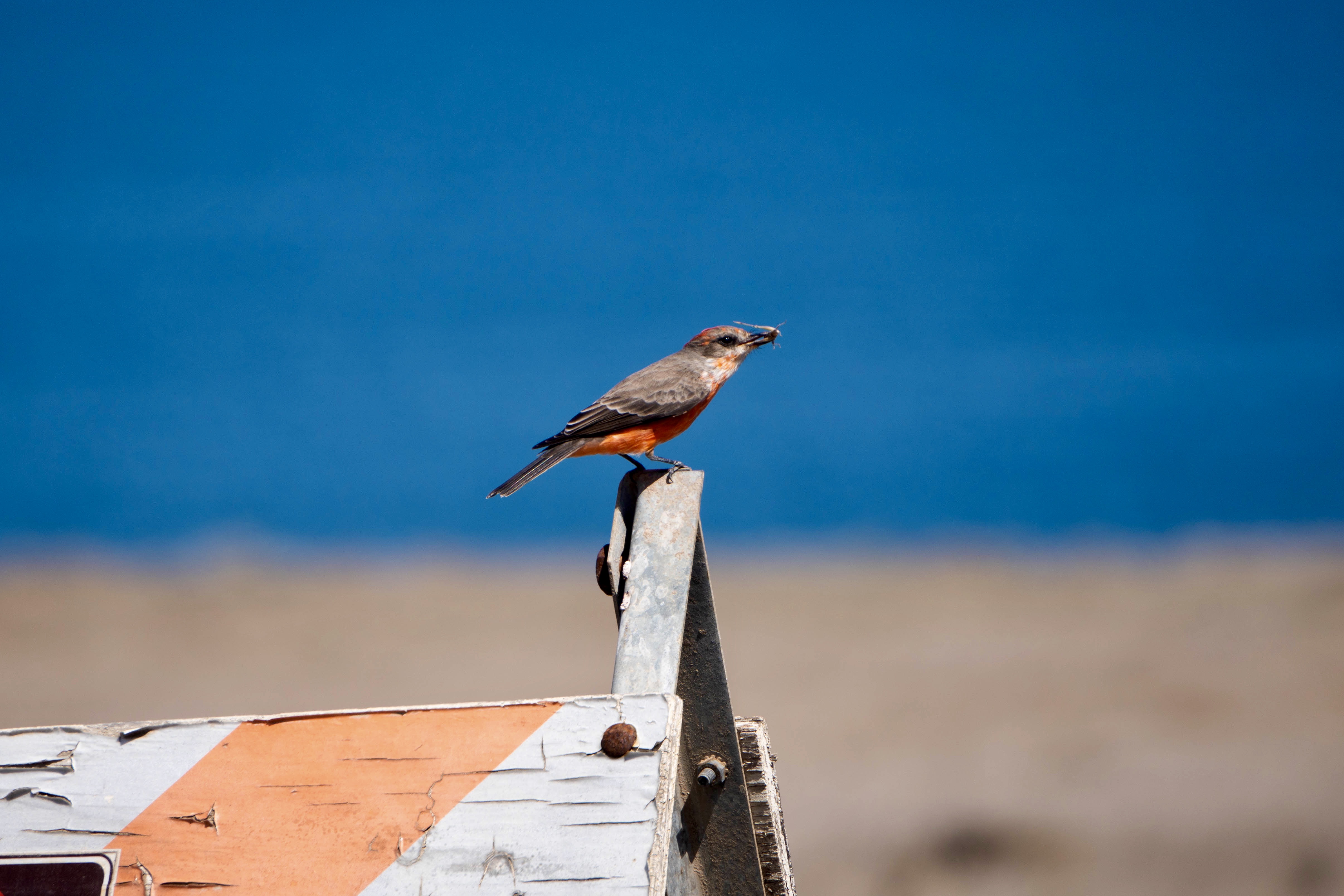
Above: a vermillion flycatcher perches on a sign to snack.
More about the Chumash people and Santa Rosa Island:
https://www.wishtoyo.org/chumash-village-1
https://www.nps.gov/places/000/chumash-on-santa-rosa-island.htm
 Stars, like salt.