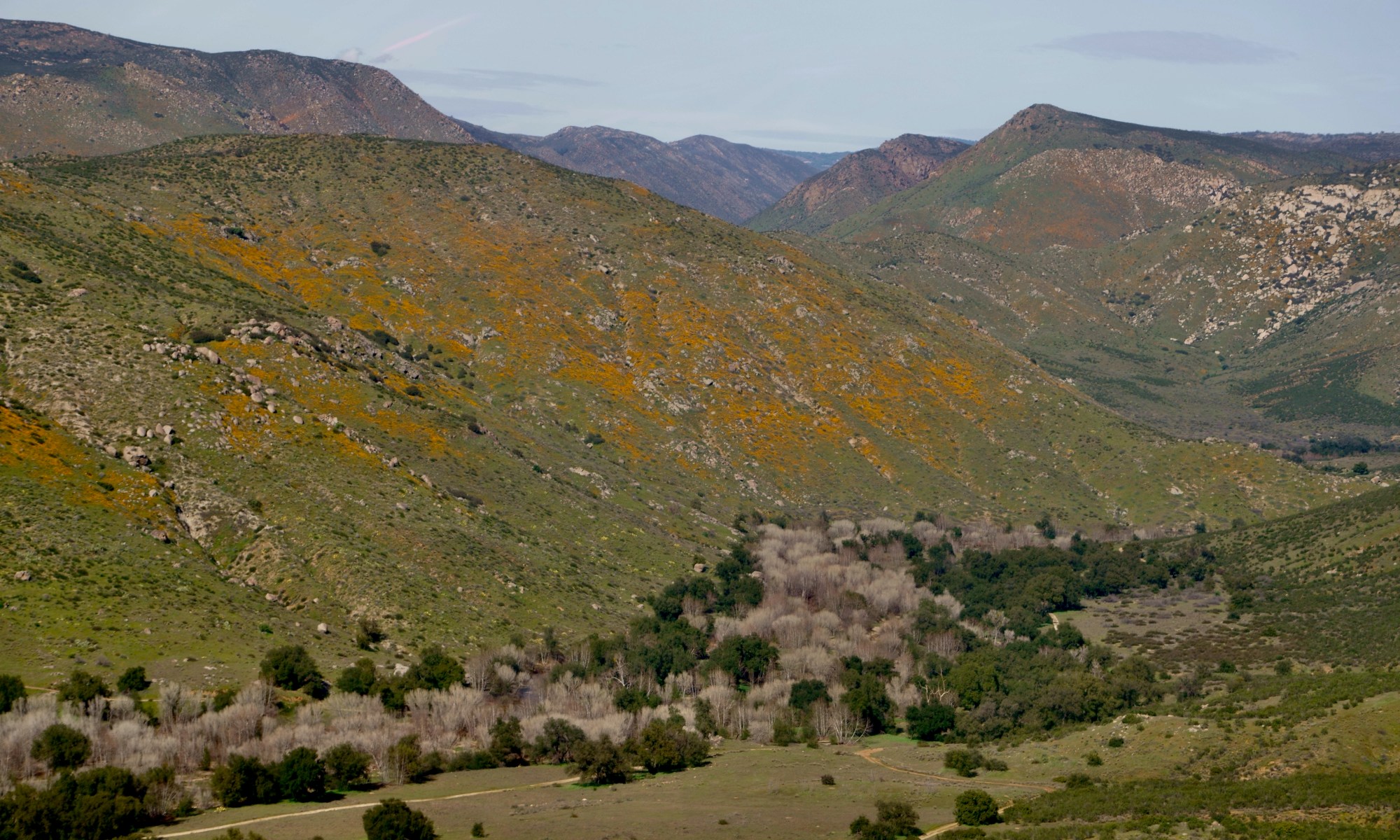
Last winter, after eight rainless years, California’s drought finally ended. In San Diego, it rained what felt like every week, for several months. The hills flushed green then orange with poppies, the desert bloomed, the reservoirs refilled, the rivers flowed. We learnt that there were waterfalls in the mountains.
In early March, in an extraordinary act of generosity, we were connected with a fellow San Diego River Park volunteer who offered to take us on a helicopter tour of the river from sea to source. At that point, we had spent hours in the river hauling out trash, clearing invasive plants, mapping, birding and exploring. Our relationship with it felt strong. But witnessing the river as a whole was what crystallised our appreciation for all the good that it brings. The San Diego River is a burst of nature and wildness in one of the busiest parts of the city. It’s a sanctuary for so many of the species that have been crowded out of the rest of the region. It’s fifty-two miles of places to stretch our legs. It connects the county from the mountains all the way to the sea. Flying the river redoubled our desire to see it protected and restored.
Here is a photographic account of that trip.
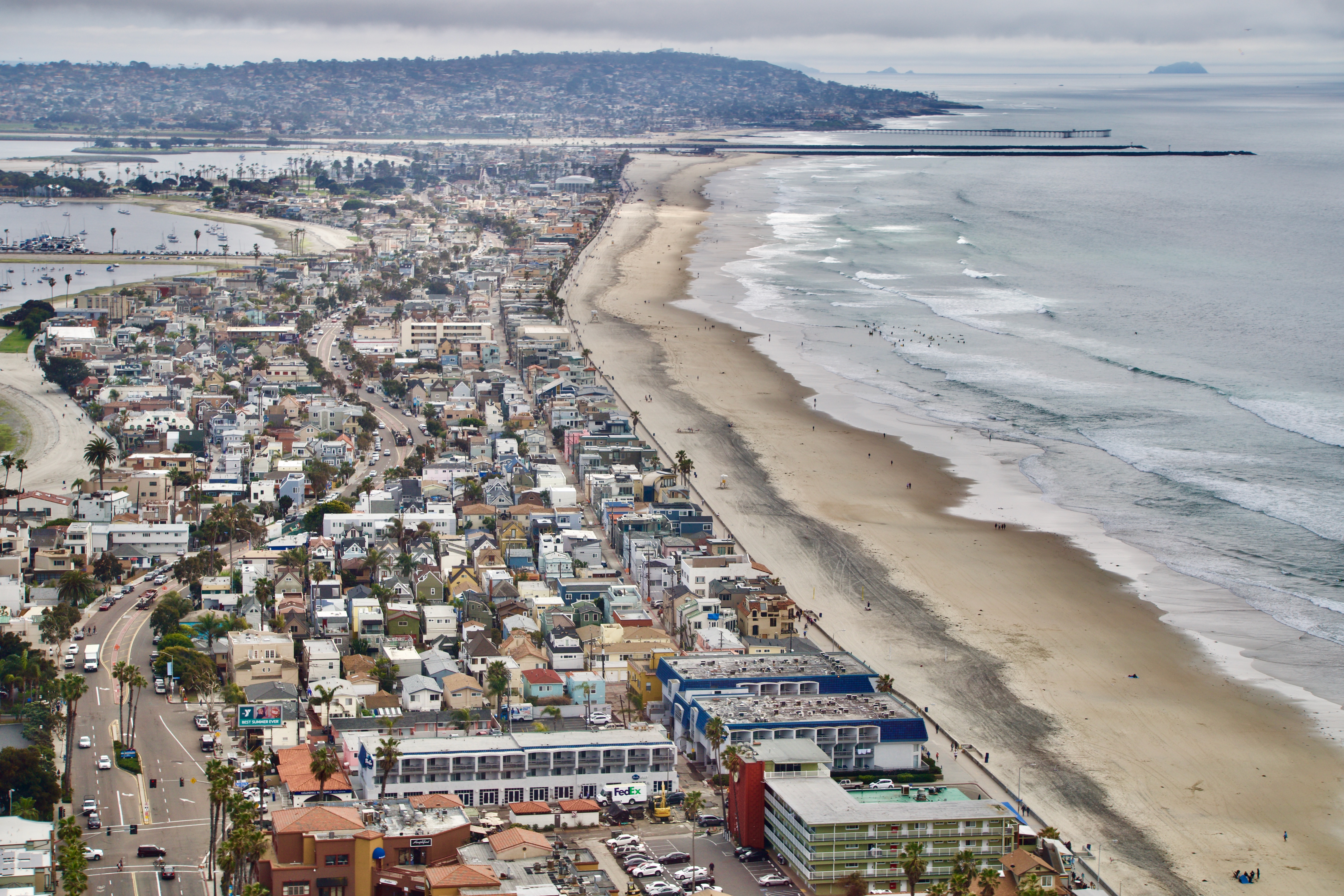
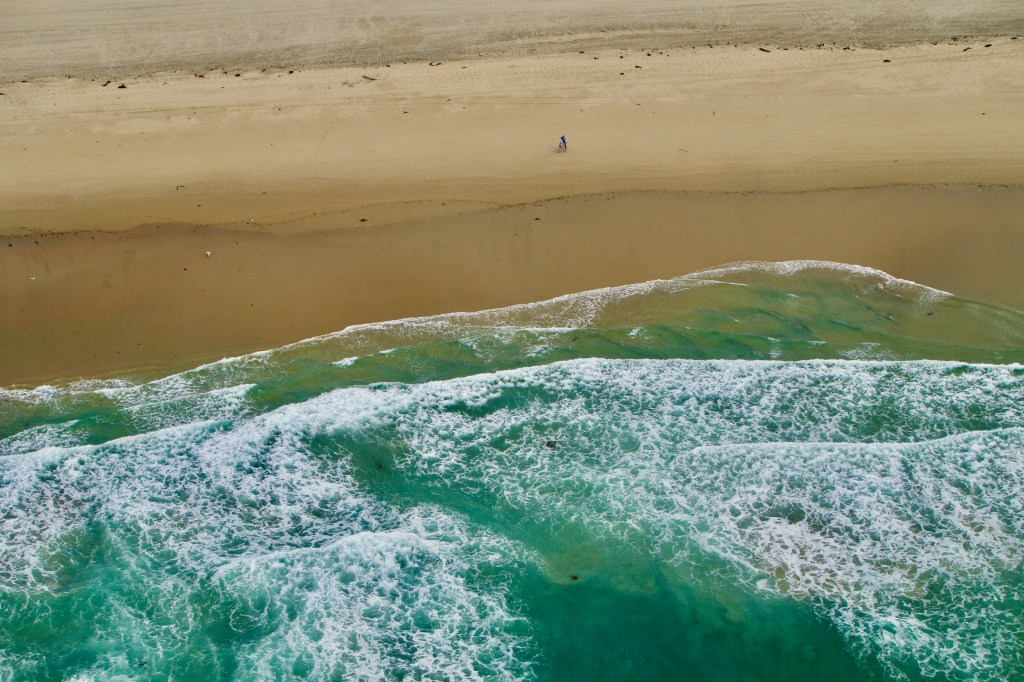
Mission Beach. Just after take-off, flying south towards the mouth of the San Diego River. The river enters the ocean beyond the two parallel jetties seen here in the background. Further south, one glimpses the Ocean Beach Pier.
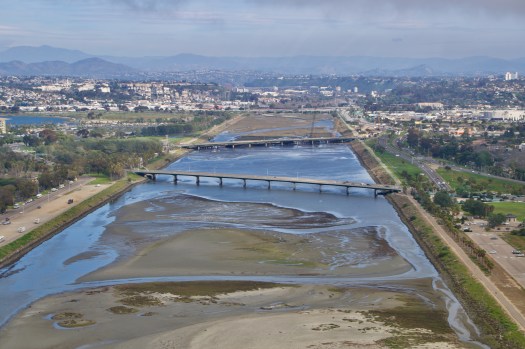
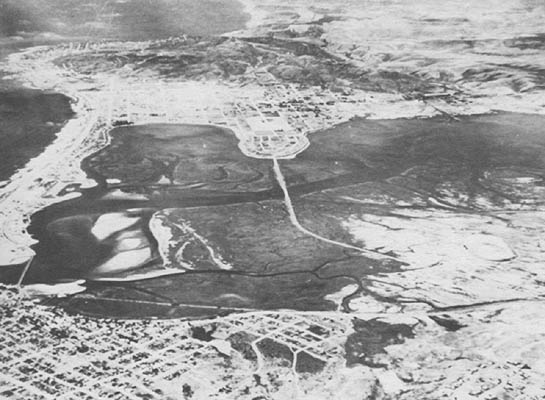
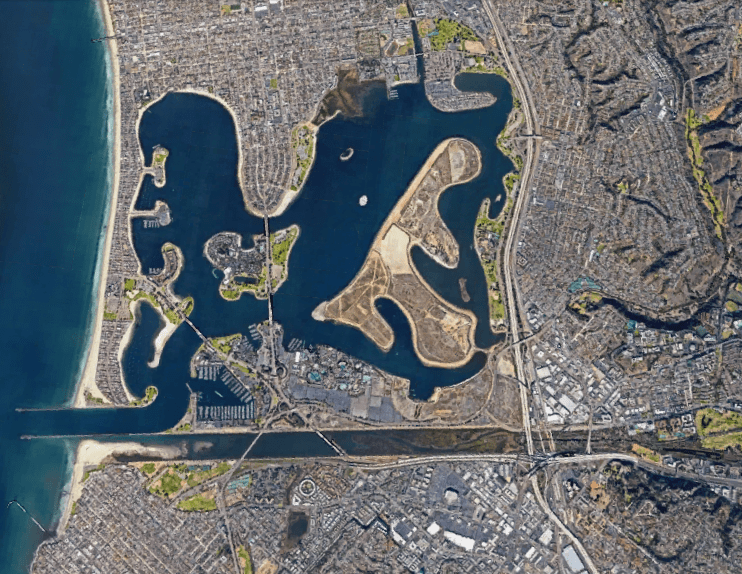
Golf courses, malls, housing developments, business parks and preserves are all features of the San Diego River’s floodplain. About two miles before the ocean, the river widens into an estuary, which is closed to the public in order to better support the many sensitive and migratory bird species that call it home. Before the coast was developed and the levees built, the estuary was wider and the river channel was capable of alternating its course between the San Diego Bay to the south and the present day Mission Bay to the north.
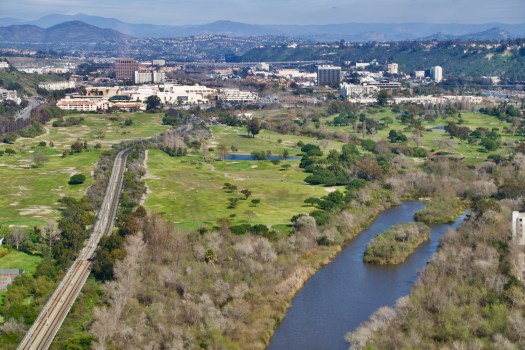
Mission Trails Regional Park is the first big burst of greenery heading east along the river. Its rolling hills, open grasslands, valleys and woodlands are time capsules from a bygone version of the San Diego region. We followed the river through the gorge that bisects the park. A quarry punctuates the entrance to the gorge with perhaps the starkest visual contrast of the entire journey: exploitation butting up against preservation.
Mission Gorge. We usually enter the park at one of several trailheads. It was our first time arriving via the quarry.

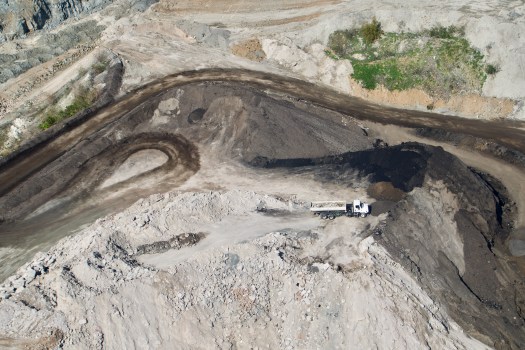
The quarry. Our bird’s eye view revealed surprising colours in the sediment.
Finally natural. In the gorge, the river suddenly changes. It’s so much more wild; the way it bubbles over boulders make it feel practically alpine. It’s easy to forget that it is surrounded by urbanisation just beyond the limits of the park.
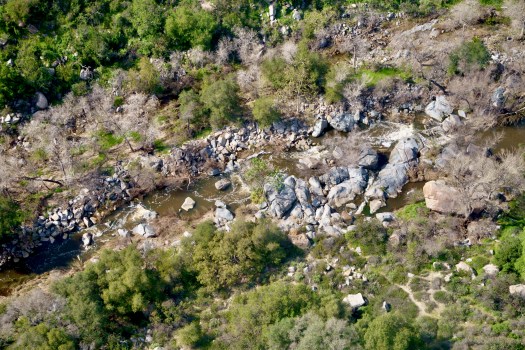
Beyond the eastern-most suburbs, a wall of granite surges from the valley: it’s El Cajon Mountain. This is where the map turns green. This is where the chaparral scrub is lush and the lilac and chamise bloom profusely in the spring and early summer. Poppies light-up entire mountainsides.

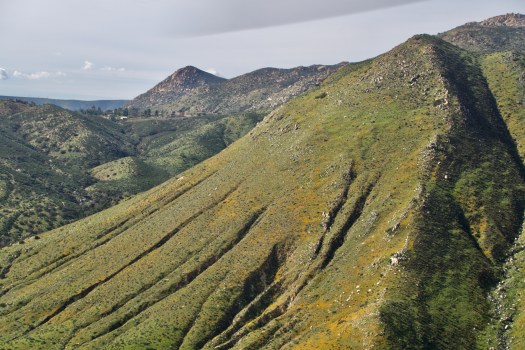
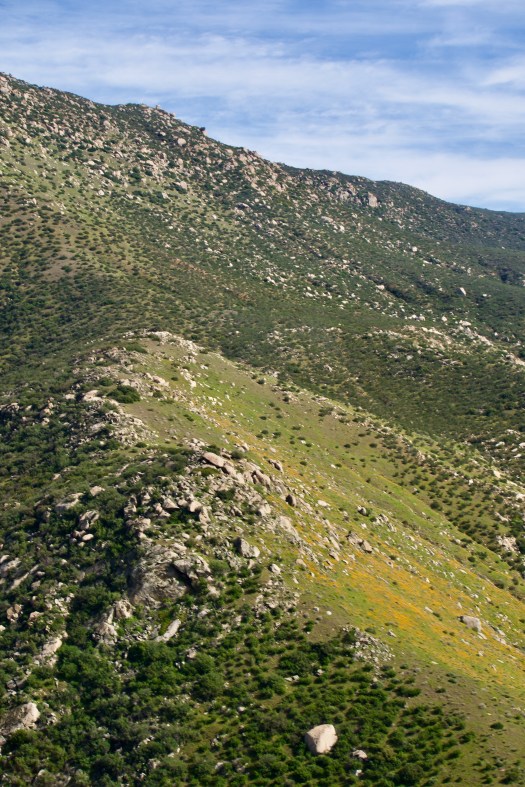
Finally, the waterfalls. We flew up and over each fall, then circled sharply, steeply back down each drop in what felt like a tripling of gravity. The mild “car” sickness I had been suppressing since liftoff became full-fledged nausea.

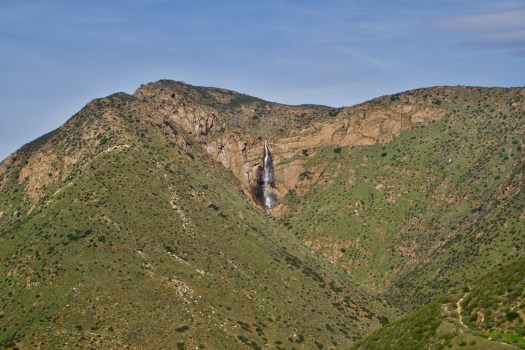
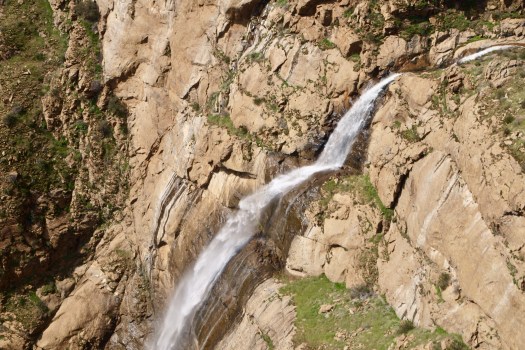
The source. The San Diego River begins as a source on a gently rolling mountain saddle not far from the town of Julian.
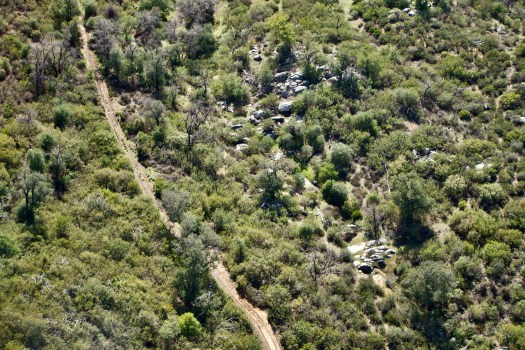
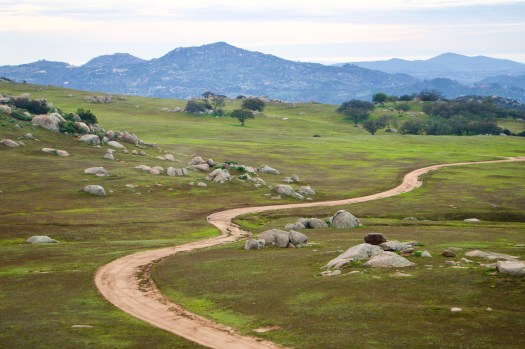
“Do you like off-roading?” our pilot Lyle asked us as we approached this open plateau dotted with oaks. He didn’t wait for an answer, but swooped low over a meandering dirt road and raced the helicopter only feet above it, banking from side to side to stay on route.
Having never flown in a helicopter before, I had no idea what to expect from the journey. I certainly didn’t think that landing at the Julian Pie Company parking lot for apple pie and ice-cream would be on the agenda. So extravagant. I felt much less queasy after that snack.
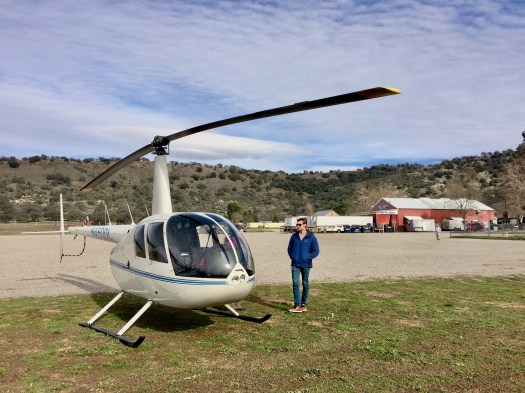
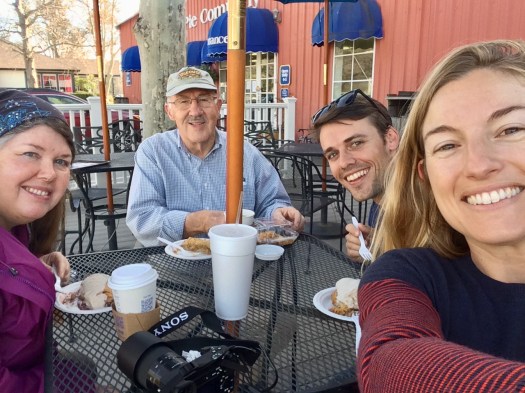
We chose to follow a different watershed back to the coast, flying home over the San Dieguito River.
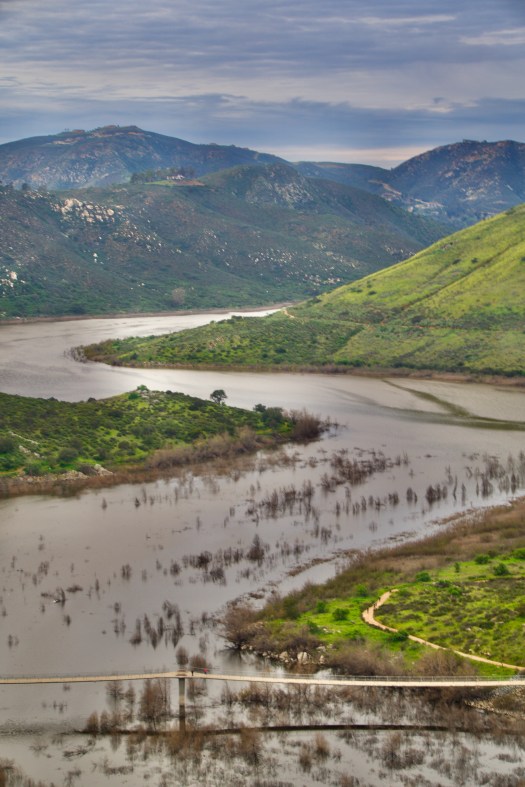
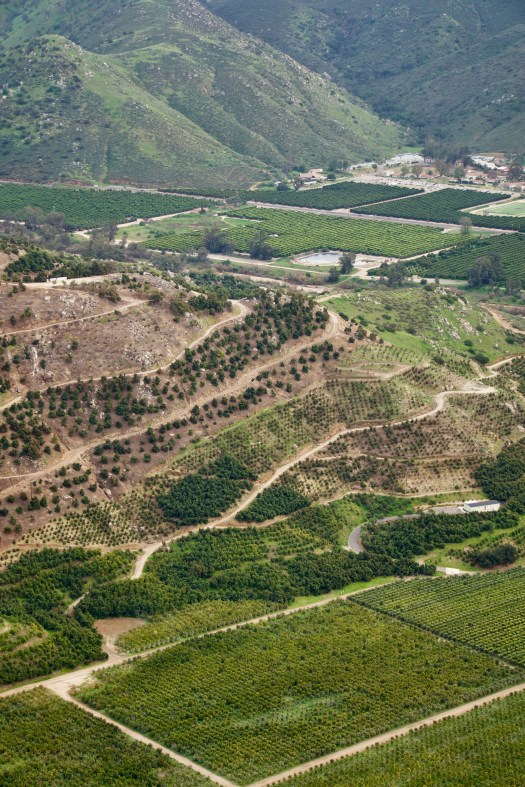
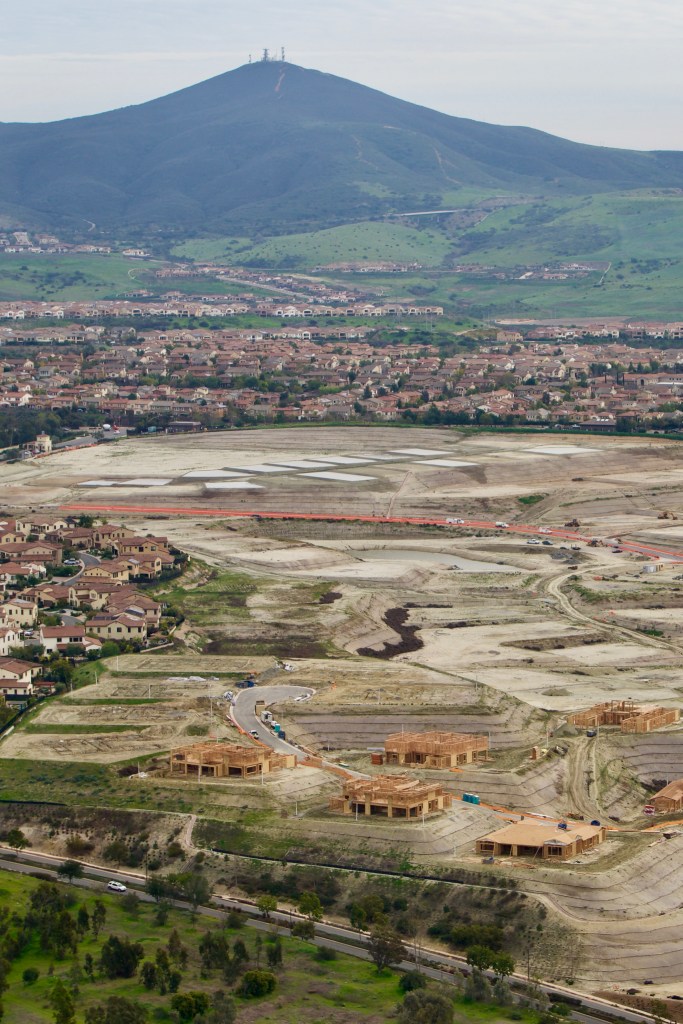
The San Dieguito Watershed: water, agriculture, development.
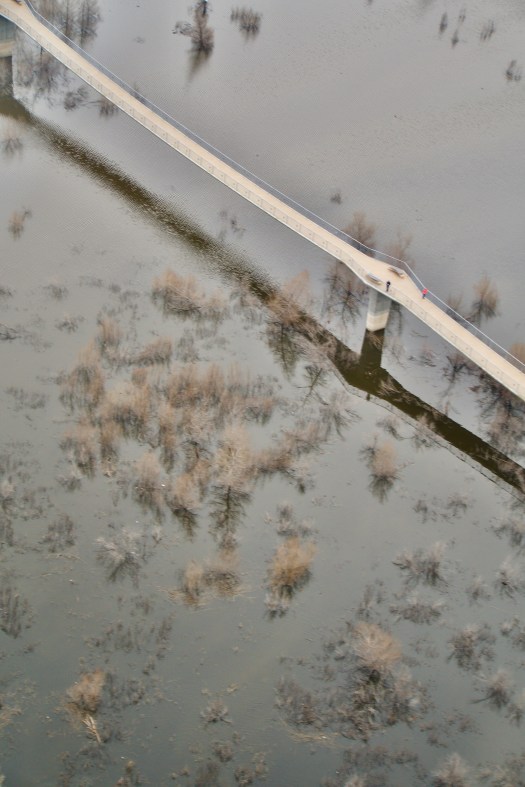
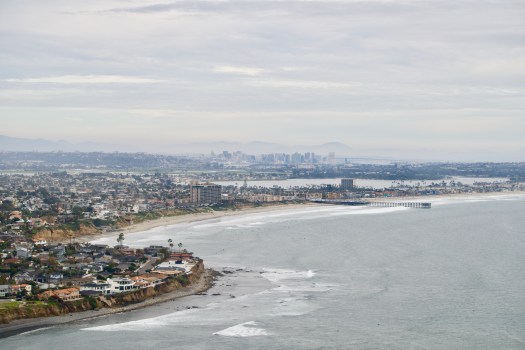
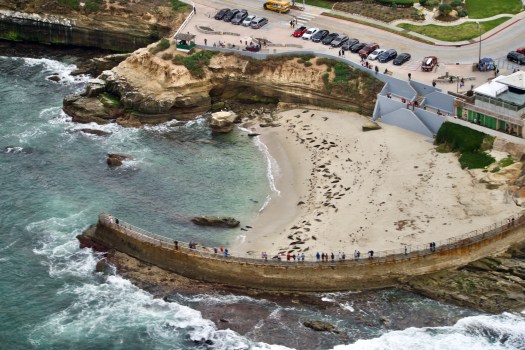
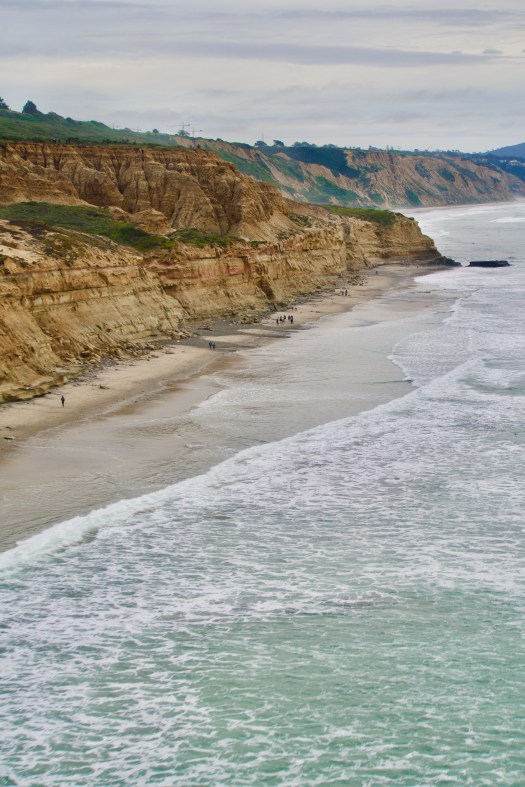
Back at the coast, we turned south, checking off the beaches as we went: Del Mar, Torrey Pines, Black’s, the sea-lions sunbathing in La Jolla, Windansea and Pacific Beach.

Eric made this awesome one minute video:
To learn more about protecting and restoring the San Diego River and its surroundings:
The San Diego River Park Foundation conserves land throughout the river’s watershed and advocates for the creation of a trail along the length of the river. It offers a large variety restoration and educational programs for volunteers and community members to get involved. https://www.sandiegoriver.org
San Diego Audubon is engaged in critical conservation work to restore populations of endangered bird species that rely on the remaining wetland and coastal habitats at the mouth of the San Diego River and in Mission Bay. Their Rewild Mission Bay program advocates for the restoration of wetland habitat in the bay, where much of the remaining wetlands are projected to be lost due to sea level rise. https://www.sandiegoaudubon.org
 Stars, like salt.
Wow! Great photos, Katy! I had a client who flew us over the County several times, but I didn’t get anyjthing as good as these photos. Thanks for sharing.
LikeLike
Thanks, David!
LikeLike